
Beef Lasagna with Spinach and Ricotta
Three layers of lasagna pasta, a rich tomato-beef sauce and spinach-flecked ricotta, finished with a golden mozzarella and Parmesan topping. Makes eight portions.
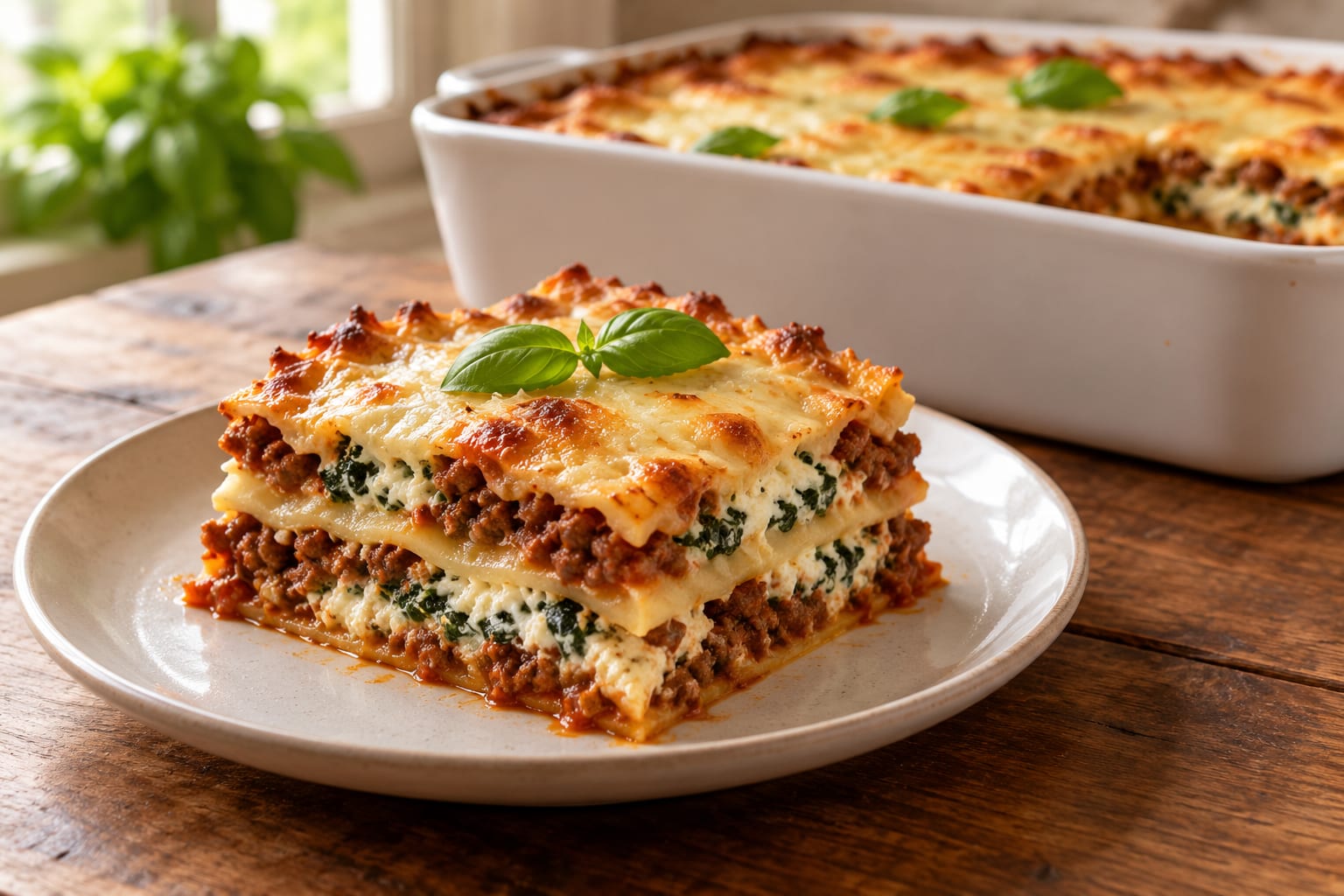
This lasagna combines a savoury beef sauce with a creamy ricotta filling and finely chopped spinach. Three layers of wide pasta give each slice structure, while mozzarella and Parmesan make a golden top. A little fresh basil finishes the dish.
Prepare the sauce first, then cook the pasta and spinach while it simmers. The spinach is squeezed before mixing with ricotta so it does not release a puddle into the dish. This original Italian-American-inspired version uses ricotta rather than a separate white sauce, with no wine, sausage or egg in the filling. Allow about two hours including a 15-minute rest before cutting; oven performance and pasta instructions may extend the estimate.
Why you’ll love this recipe
A thick but spoonable meat sauce coats the pasta without making the dish soupy. Squeezing wilted spinach keeps the ricotta filling manageable. Precooked regular lasagna sheets remove the hydration guesswork of oven-ready sheets. Covering the dish first heats the layers, and uncovering it lets the cheese brown. A short rest makes the portions easier to lift.
Before you start · Equipment
Kitchen scale; large heavy saucepan; large pot for pasta; colander; wide skillet; clean cloth for squeezing spinach; mixing bowl; trays for cooked pasta; 9 x 13 inch (23 x 33 cm) baking dish at least 2.5 inches (6 cm) deep; foil; food thermometer; spatula.
Everything you’ll need.
Get your ingredients ready, then follow the quantities in the recipe below.
See ingredient amounts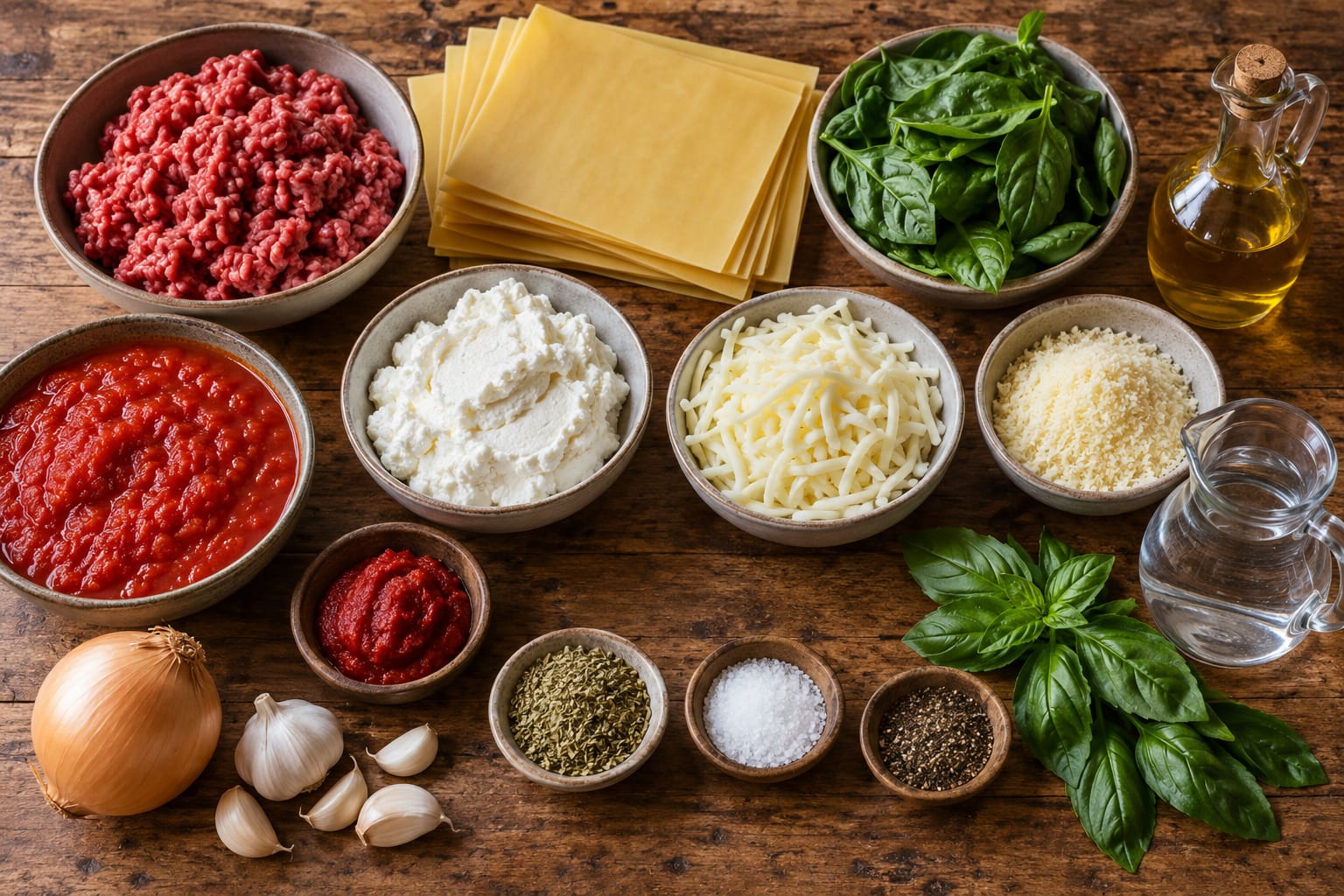
This guide describes the original 8 portions. Use the recipe card for amounts adjusted to your chosen yield.
Three components, one baking dish
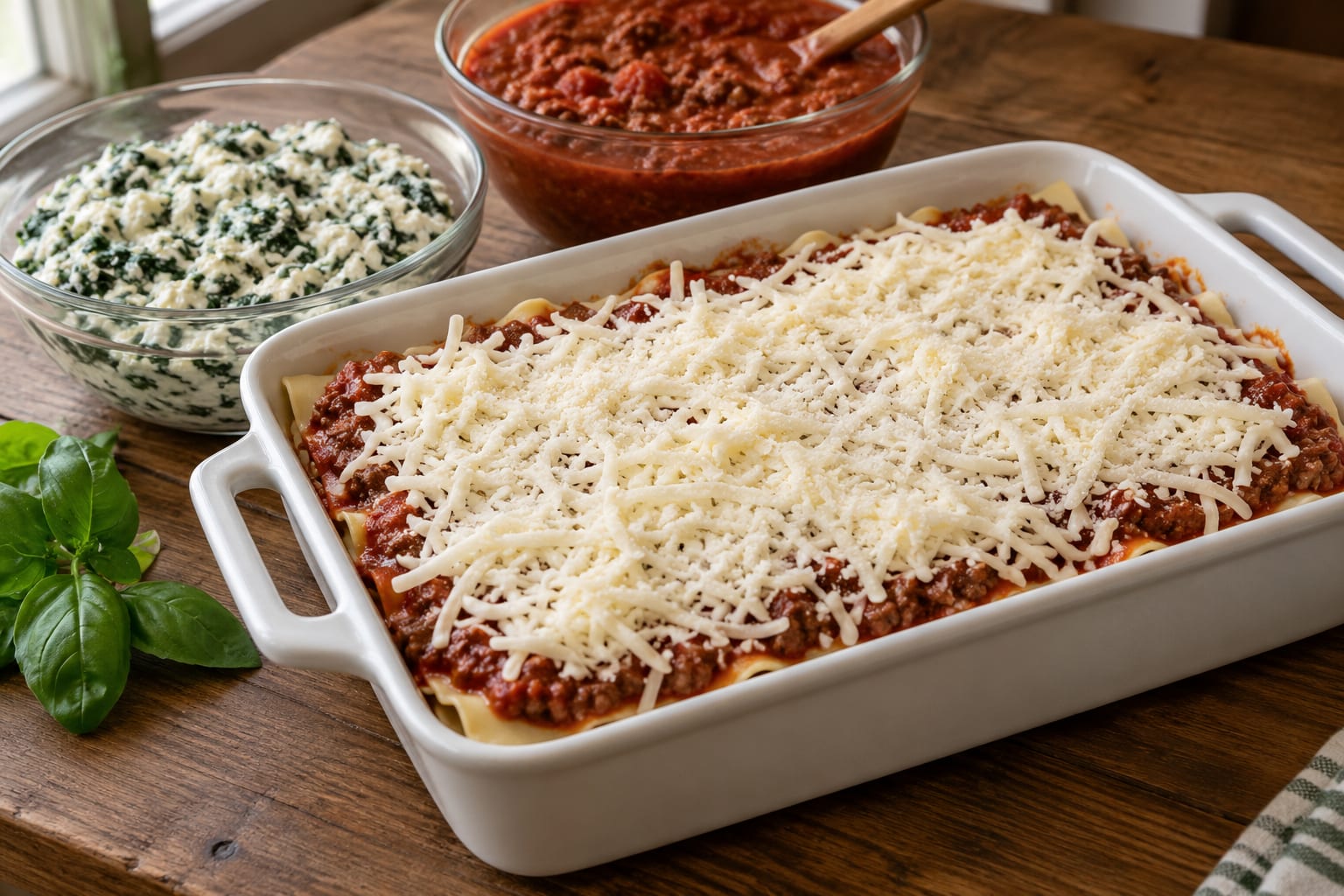
Make the meat sauce first so it can simmer while you prepare the other components. Keep cooked sheets spread out rather than piled together. Have all three portions of pasta and filling ready before assembling.
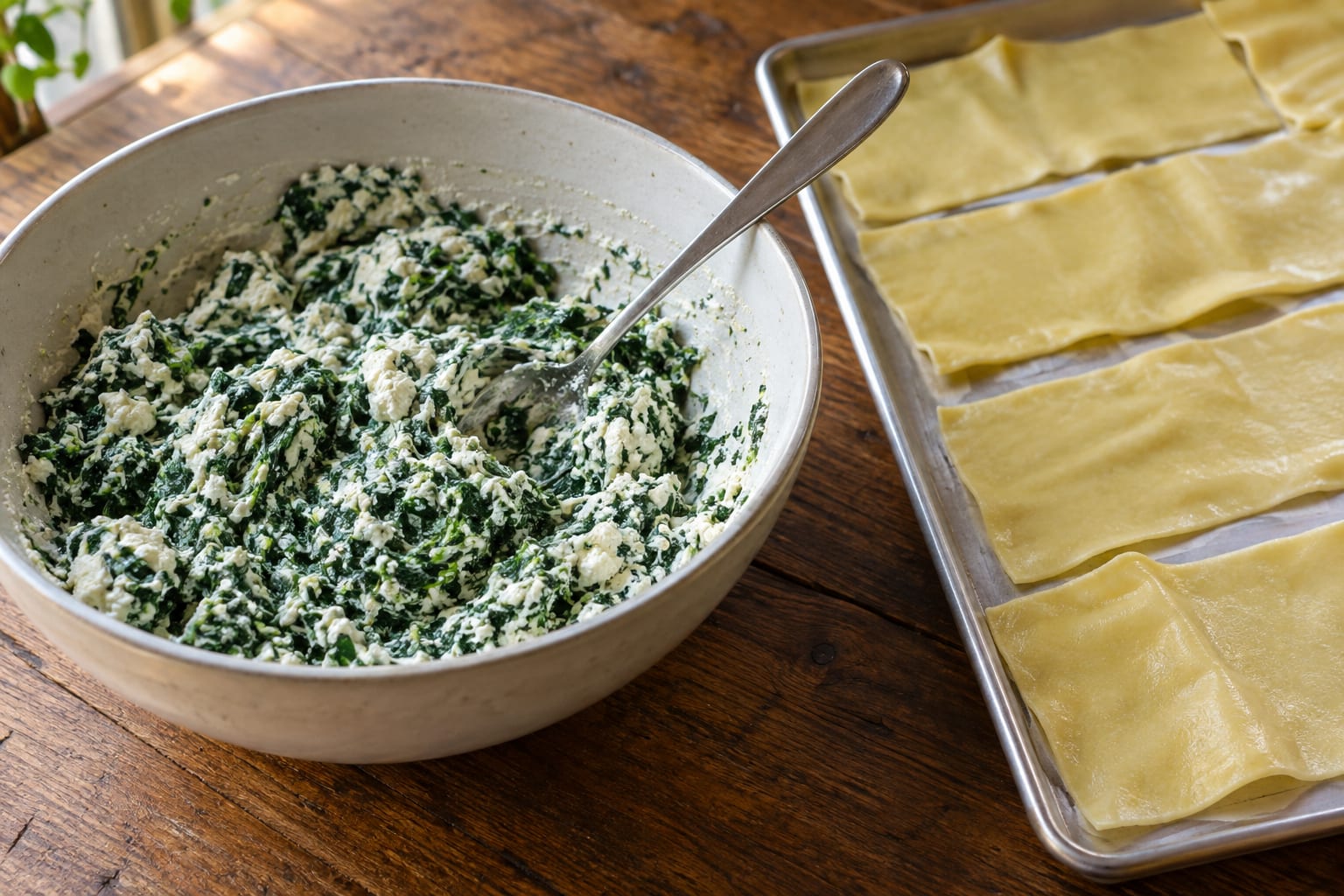
Give the spinach a firm squeeze
Spinach releases considerable water when wilted. Cool it enough to handle safely, squeeze it in a clean cloth and chop finely. The green flecks distribute through the ricotta rather than forming a separate wet layer.
A sauce that spreads without flooding
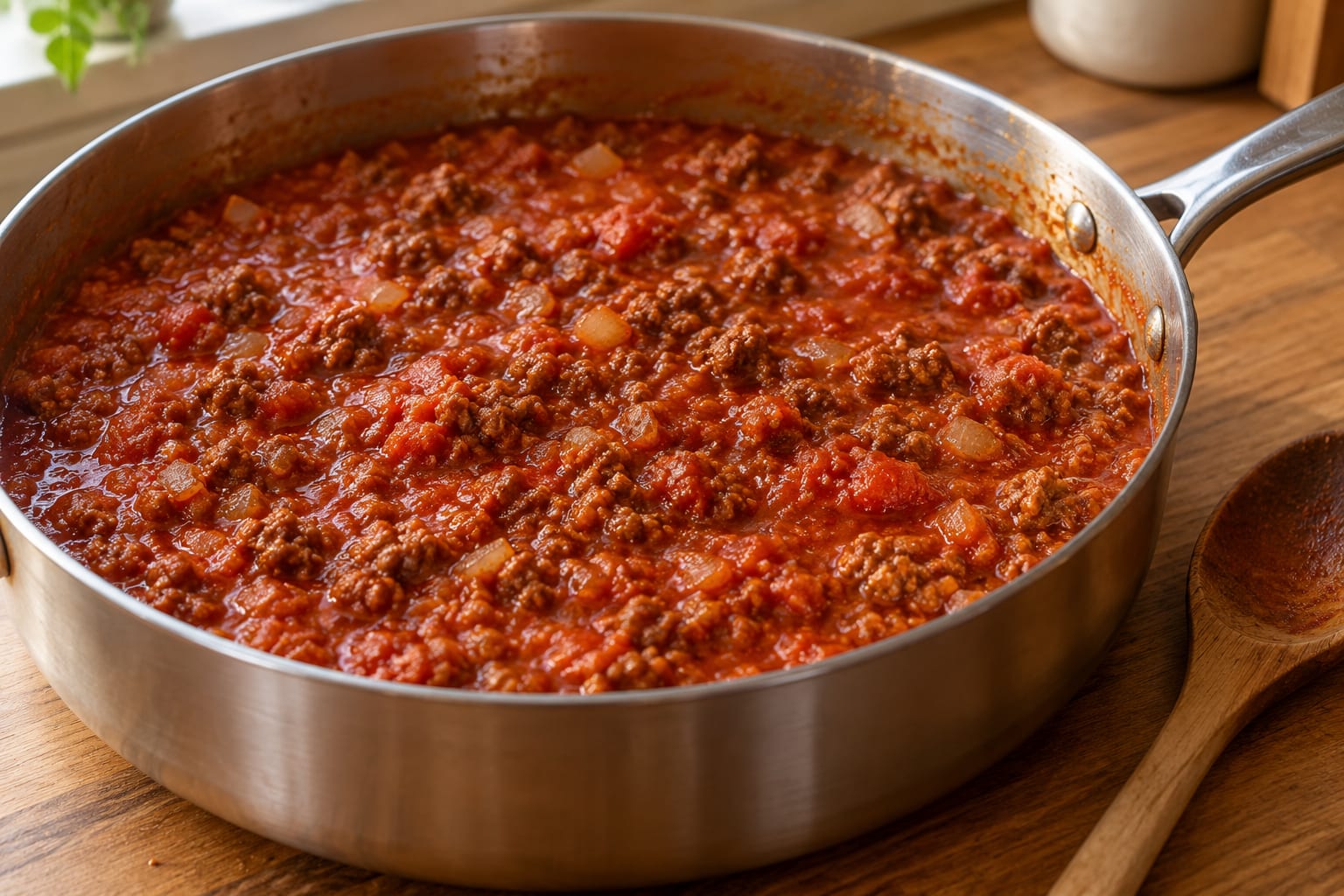
The sauce should be moist and spoonable but should not leave a watery pool when stirred. Keep all measured oil and rendered beef fat for the stated formula. Reduce watery sauce before layering; do not compensate by adding dry pasta.
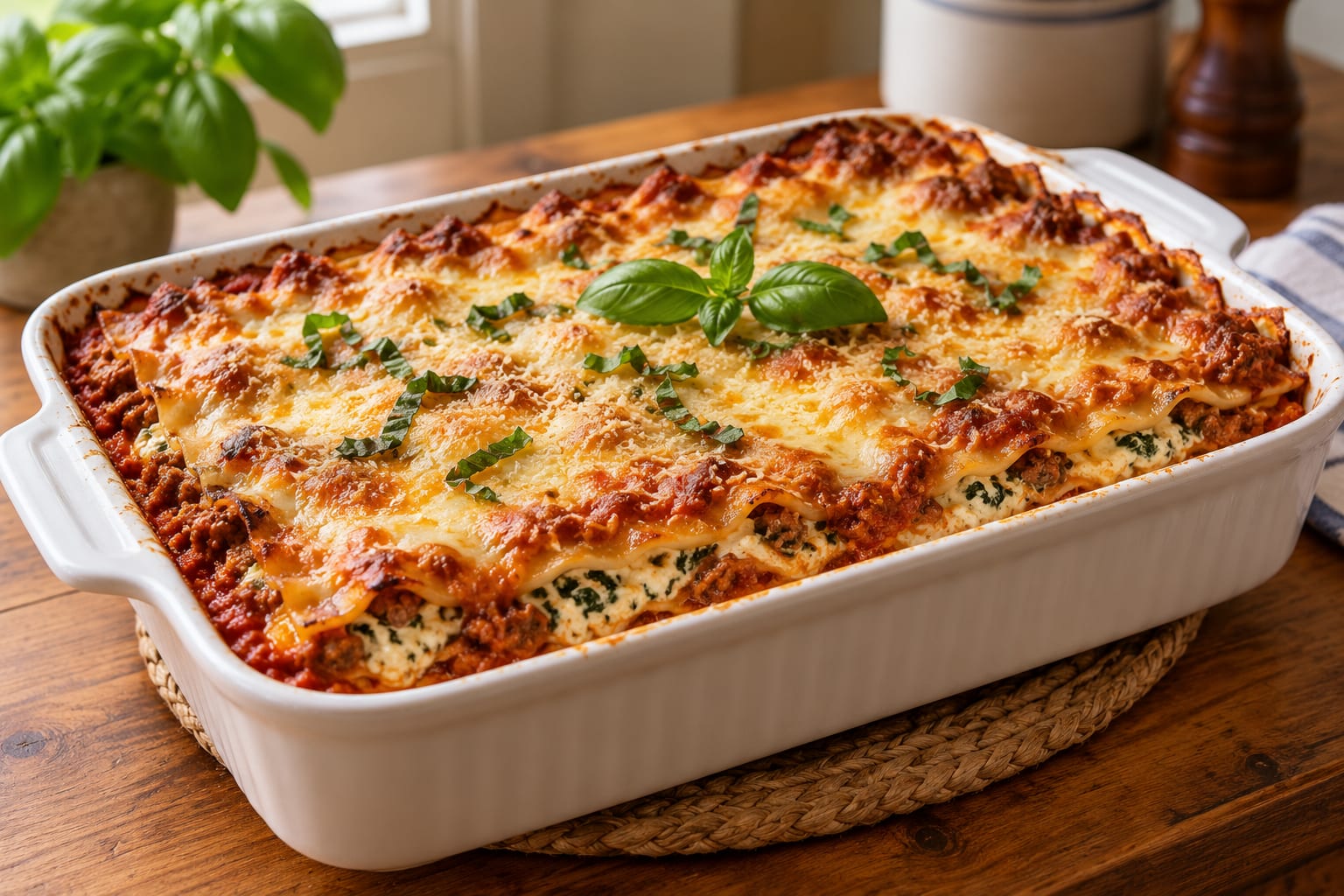
Cover first, brown last
A foil tent protects the topping during the first part of baking. Uncovering lets the mozzarella colour while the centre finishes heating. Oven timing is an estimate; measure the centre and other spots.
- Cook ground beef to at least 160°F (71°C) before adding it to the sauce.
- Bake the assembled casserole to 165°F (74°C) throughout.
- If the top colours early, replace a loose foil cover and keep checking the centre.
Rest before serving
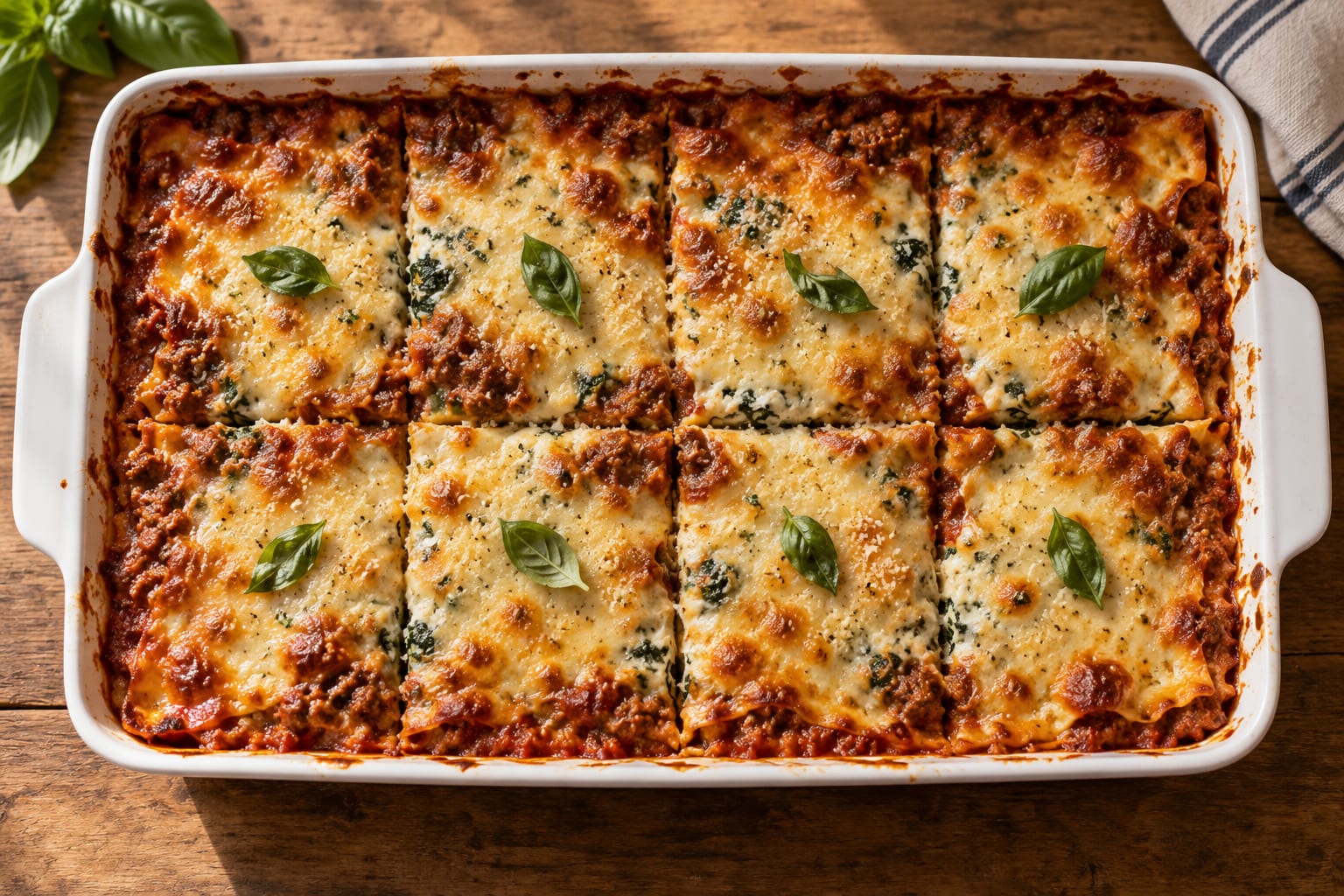
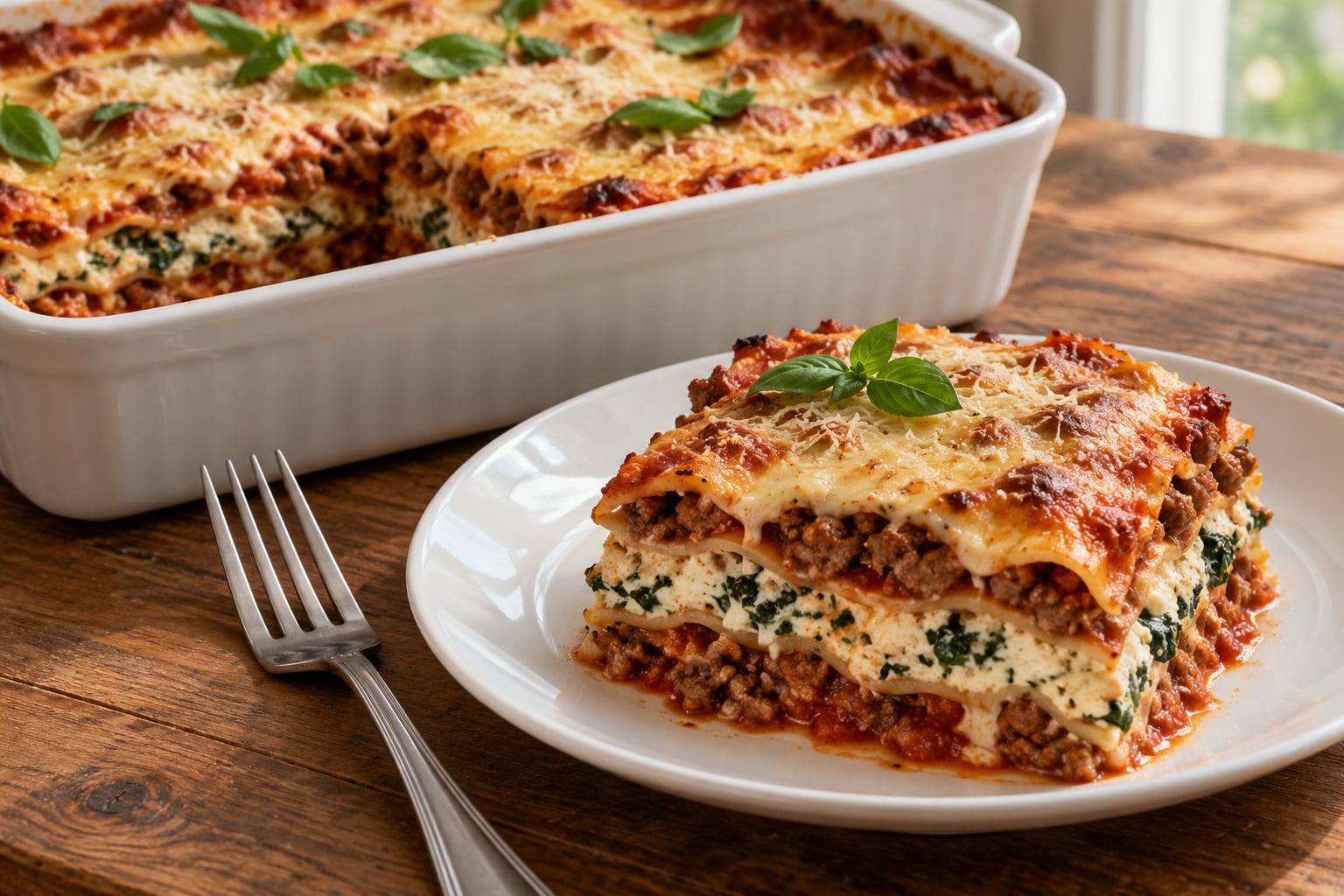
Let the hot lasagna stand for 15 minutes so its layers settle. Cut two rows of four and lift each portion with a wide spatula. A fresh salad can accompany it; sides are outside the nutrition estimate.
Keep leftovers in small portions
Divide leftovers into shallow containers and refrigerate within 2 hours, or 1 hour above 90°F (32°C), at 40°F (4°C) or below. Use within 3 days. Reheat covered portions until several places reach 165°F (74°C). Do not leave the entire dish on the counter waiting for it to become cold.
About the ingredients
- Regular lasagna sheets
Use 250 g dry enriched wheat lasagna pasta that is meant to be boiled. Sheet sizes vary: divide the cooked pasta into three portions and trim to fit the pan. Fresh pasta, whole-wheat sheets and oven-ready sheets have different hydration and nutrition. The source calculation uses generic enriched dry pasta as an explicit proxy for lasagna sheets.
- Ground beef and tomatoes
The formula uses 90% lean beef and no-salt-added tomatoes and paste. Retain all meat fat and tomato juice. Draining fat, changing beef fat percentage or choosing salted tomato products changes the calculation. Simmer until the sauce is thick enough to spread.
- Spinach and ricotta
Weigh 300 g spinach before wilting and squeezing. The calculation counts that full raw weight; nutrients lost in squeezed liquid are not modeled. Drain free ricotta liquid before weighing 350 g. Part-skim ricotta has different nutrition from whole-milk ricotta.
- Mozzarella and Parmesan
Use low-moisture part-skim mozzarella rather than wet fresh mozzarella. Half of the 30 g Parmesan goes into ricotta and half on top. Cheese brands and sodium vary; the calculation uses generic USDA grated Parmesan.
- Basil and measured seasoning
All 10 g fresh basil is added after baking. The total salt is 5 g, split 4 g sauce and 1 g filling; pepper is split equally. Unsalted pasta cooking water prevents an unmeasured salt contribution. Side dishes and extra grated cheese are separate from the stated nutrition.
How to make Beef Lasagna with Spinach and Ricotta
Simmer a tomato-beef sauce, boil regular lasagna sheets and mix squeezed spinach with ricotta. Build three pasta–ricotta–meat-sauce layers, top with mozzarella and Parmesan, bake to 165°F (74°C), rest and cut eight portions.
 1. Build a thick tomato and beef sauce
 2. Cook the pasta and prepare spinach ricotta
 3. Assemble three pasta layers
 4. Bake, rest and cut eight portions
Watch How To Make It

chefzelish.com
Beef Lasagna with Spinach and Ricotta
Three layers of lasagna pasta, a rich tomato-beef sauce and spinach-flecked ricotta, finished with a golden mozzarella and Parmesan topping. Makes eight portions.
Ingredients
0 / 19 readyIngredient amounts for 8 portions
Tomato and beef sauce
Pasta and spinach ricotta
Cheese topping and finish
Let’s make it.
Build a thick tomato and beef sauce
Heat the olive oil in a large saucepan over medium heat. Soften the onion for about 5 minutes, then add garlic and stir for 30 seconds. Add the ground beef and break it into small crumbles. Cook for about 6–8 minutes, stirring, until the beef reaches 160°F (71°C) as checked in several places with a food thermometer. Keep all rendered fat in the sauce. Stir in tomato paste, then crushed canned tomatoes with all juice, 100 g water, oregano, 4 g salt and 0.5 g pepper. Simmer uncovered for about 25 minutes, stirring often, until thick but spoonable. Reduce further if watery. If it sticks, lower the heat and add a small measured splash of water; this can extend simmering time.
Cook the pasta and prepare spinach ricotta
While the sauce simmers, heat the oven to 375°F (190°C) conventional or 350°F (180°C) fan. Boil the regular dried lasagna sheets in unsalted water according to the package, stopping when flexible and just tender. Drain and lay them flat on clean trays without extra oil. Wilt the washed spinach in a wide skillet with only the water clinging to its leaves, about 2–3 minutes. Let it cool enough to handle, squeeze firmly in a clean cloth, then finely chop. Mix with the weighed ricotta, 15 g Parmesan, 1 g salt and 0.5 g pepper. Divide both cooked pasta and ricotta mixture into three approximately equal portions. Keep raw-meat tools away from these components.
Assemble three pasta layers
Spread about 150 g meat sauce over the base of the deep 9 x 13 inch dish; no extra oil is needed. Divide the remaining meat sauce into three equal portions. Lay one-third of the cooked pasta over the base, cutting pieces to fit with minimal overlap and no large gaps. Spread one-third of spinach ricotta over it, then one-third of the remaining meat sauce. Repeat this pasta–ricotta–meat-sauce sequence twice more, using all components. There are three pasta layers, with meat sauce on top. Scatter all 200 g mozzarella and the remaining 15 g Parmesan over the surface. Tent foil above the cheese and seal around the rim without pressing it into the topping.
Bake, rest and cut eight portions
Bake on the middle rack, covered, for 25 minutes. Remove the foil carefully and continue baking for about 15–20 minutes, until the top is golden and the sauce bubbles at the edges. Check the centre and several other spots with a food thermometer: the casserole must reach 165°F (74°C) throughout. Add time if needed; loosely cover again if the cheese browns before the centre is hot enough. Rest for 15 minutes, then scatter with all 10 g basil. Cut into two rows of four for eight portions. Use a wide spatula to lift each portion and divide any sauce left in the dish evenly.
Nutrition per serving
1 of8equal portions, including all layers and topping. Estimates may vary with ingredients and brands.
- Calories
- 437 kcal
- Protein
- 31 g
- Carbohydrates
- 35.6 g
- Fat
- 19.1 g
- Saturated fat
- 8.5 g
- Fiber
- 4.4 g
- Sugar
- 5.4 g
- Sodium
- 606 mg
Checked 10/8/2026. Values are per the serving described above, regardless of recipe yield.
Notes from the kitchen.
Helpful tips
Allow about two hours: 30 minutes preparation, 75 minutes cooking and 15 minutes rest. Some tasks overlap; package pasta times, watery sauce, oven performance and thicker layers can extend this estimate.
Make it your own
Use regular boiled lasagna sheets, 90% lean beef and the listed cheeses for this formula. Oven-ready sheets, fresh mozzarella, sausage, whole-milk ricotta and different beef fat ratios require timing or nutrition changes.
Storage & freezing
Refrigerate shallow portions within 2 hours, or 1 hour above 90°F (32°C), at 40°F (4°C) or below. Use within 3 days and reheat to 165°F (74°C) throughout.
At the table
Eight equal portions include all sauce, pasta, spinach, cheeses, oil and basil. Divide dish juices evenly. Salad, bread and additional toppings are excluded from nutrition.
A little something delicious.
Keep this recipe close for the next time the craving strikes.
0 Comments
No ratings yet
No comments yet. Have a question or tried this recipe? Leave a comment above.