
Spaghetti Carbonara with Guanciale
Spaghetti coated in a glossy egg-and-Pecorino sauce, with crisp guanciale and black pepper. No cream; four portions.
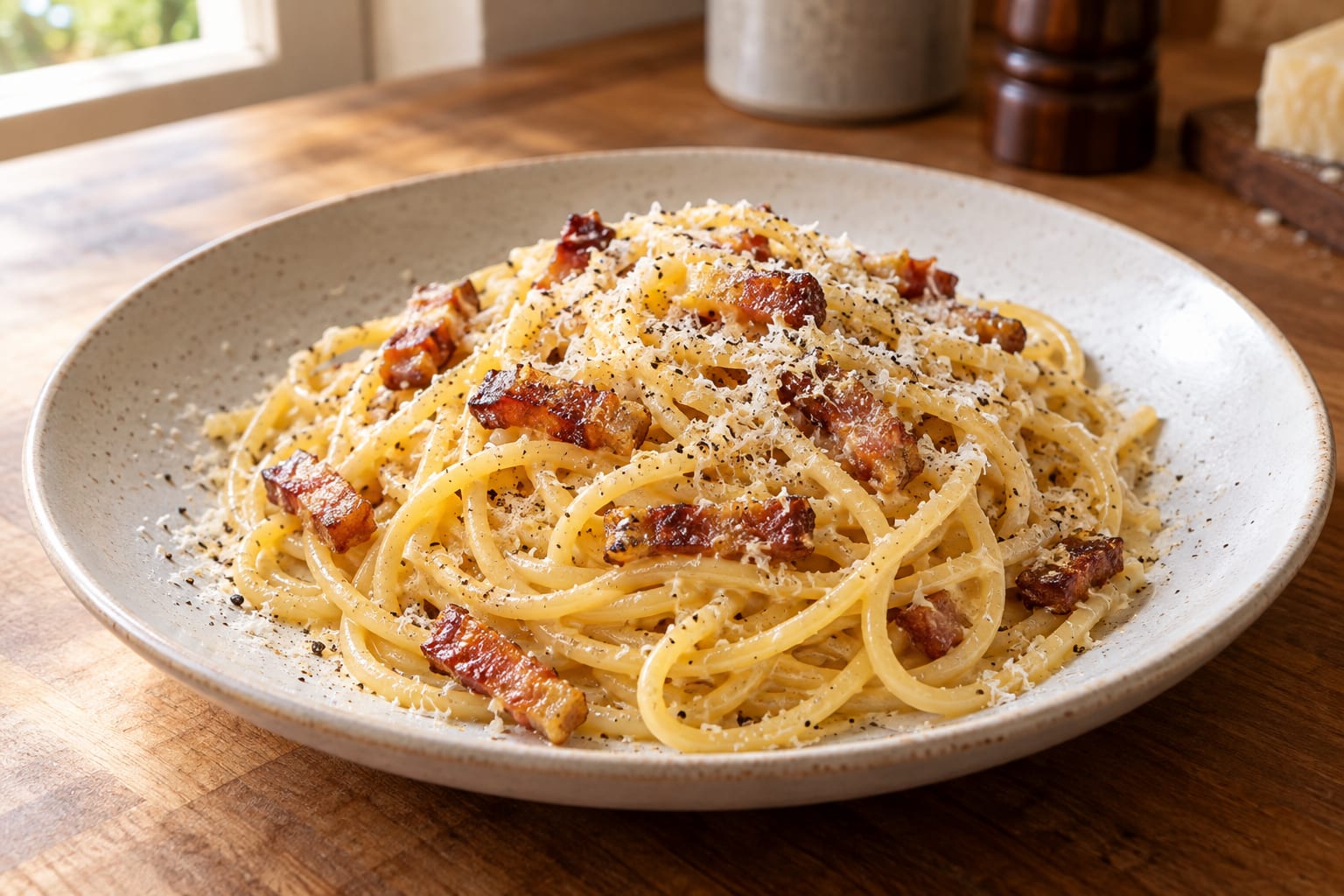
Carbonara brings a few strong ingredients together: spaghetti, cured pork cheek, sheep-milk cheese, eggs and black pepper. Here, thin guanciale strips release their fat into the pan, while finely grated Pecorino melts into a glossy sauce around the hot pasta. There is no cream in the sauce.
Have everything measured before draining the spaghetti. The finishing toss happens away from direct heat, using a little reserved pasta water to loosen the egg mixture. Pasteurized eggs are required for this version because the gently thickened sauce may still contain undercooked egg. Plan to serve the four portions immediately.
Why you’ll love this recipe
Thin guanciale strips render quickly, and their retained fat coats the spaghetti. Finely grated cheese disperses more easily than coarse shreds. Moving the pasta into a large mixing bowl keeps the egg mixture away from the hot hob, while small additions of starchy water help the sauce cling to the strands.
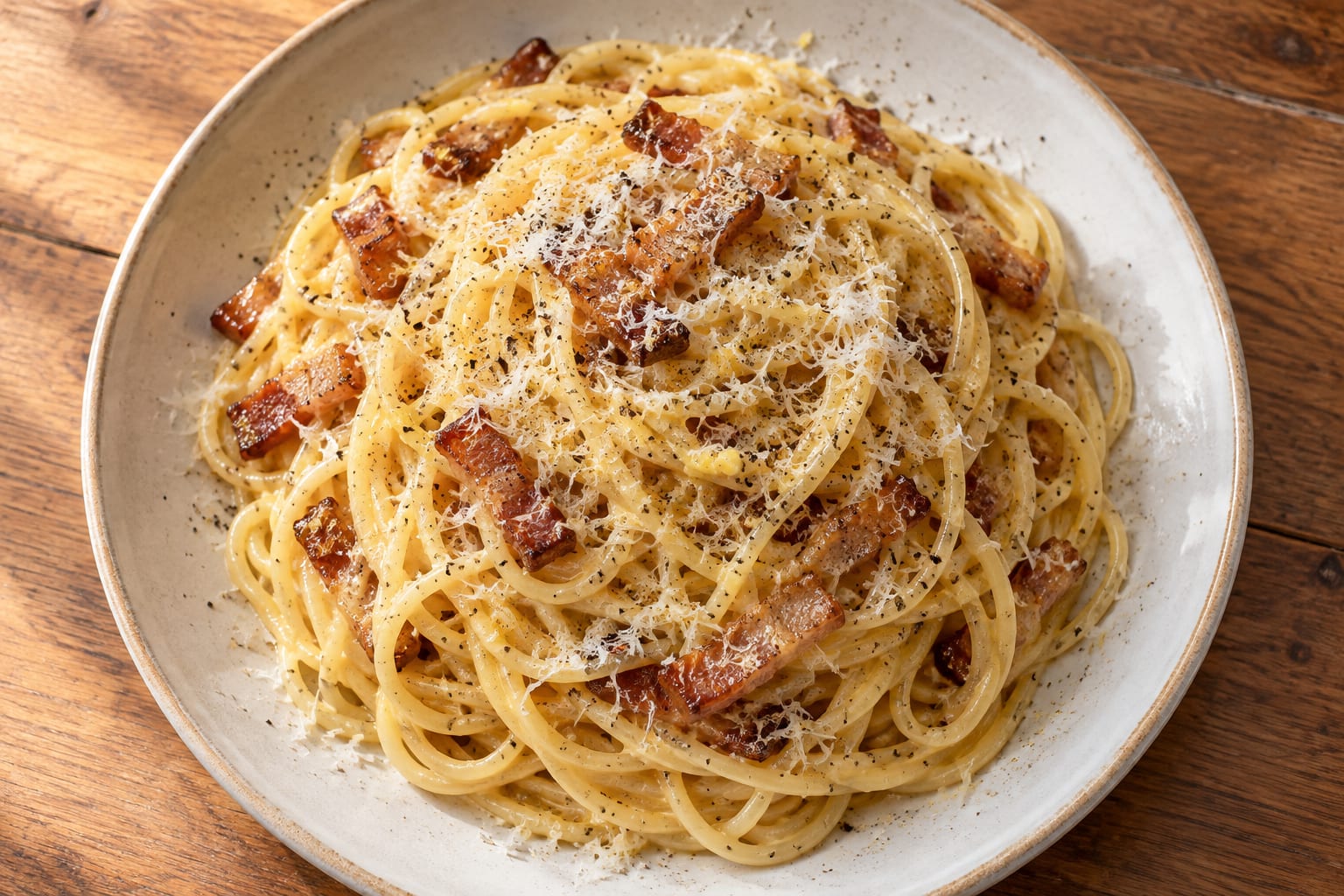
Before you start · Equipment
Kitchen scale, large pasta pot, wide frying pan, large heatproof mixing bowl, fine grater, whisk, tongs and measuring jug.
Everything you’ll need.
Get your ingredients ready, then follow the quantities in the recipe below.
See ingredient amounts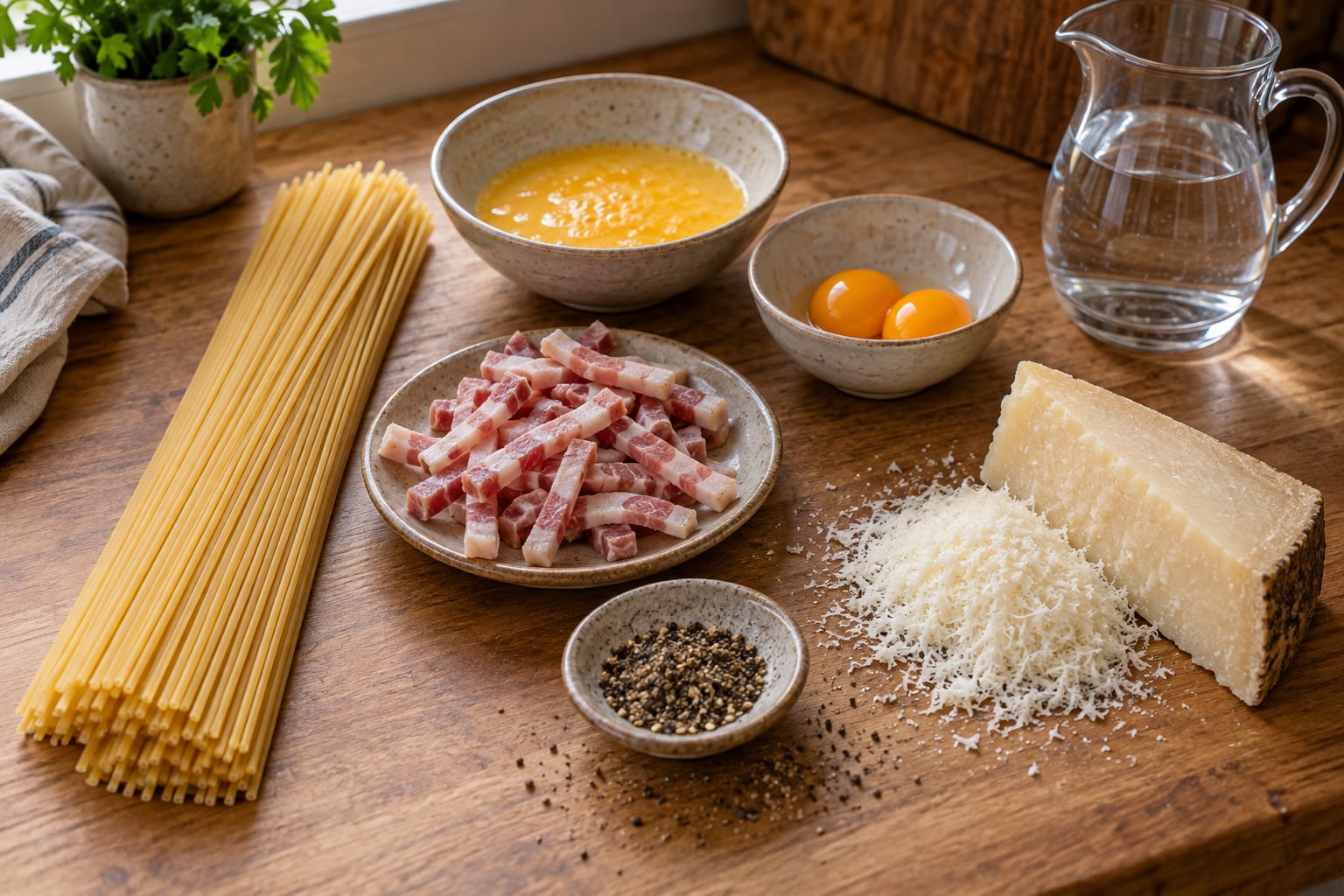
This guide describes the original 4 portions. Use the recipe card for amounts adjusted to your chosen yield.
A Roman pasta with a short ingredient list
Guanciale, Pecorino, eggs and pepper make a rich sauce without adding cream. This version uses pasteurized eggs for its gently thickened finish and an unsalted pasta pot to balance two naturally salty ingredients.
Measure before the pasta is ready
Finely grate the cheese, weigh the eggs and separate the finishing cheese and pepper first. Carbonara is easiest to finish when the guanciale is ready and the drained spaghetti is still hot.
Control the heat at the finish
Move the guanciale pan away from the hob and let vigorous sizzling stop. Toss in a separate heatproof mixing bowl. Too much direct heat can turn the sauce into small scrambled egg curds; pasta water cannot reliably reverse fully set eggs.
Use water a little at a time
Start with 60 ml reserved cooking water, then add 15 ml at a time while tossing. Aim for a thin glossy coating, not a puddle. The sauce thickens as the pasta cools, so serve promptly rather than holding the finished bowl.
Choose pasteurized eggs explicitly
Hot spaghetti and an off-heat toss do not establish a safe pasteurization temperature and time. FDA guidance recommends pasteurized eggs or egg products for recipes served with raw or undercooked egg. Check the carton or product label; free-range and organic are different claims.
Serve fresh; store leftovers promptly
Carbonara has its smoothest texture when freshly tossed. Refrigerate leftovers in shallow containers within 2 hours, or within 1 hour above 90°F (32°C). Keep at 40°F (4°C) or below and use within 3 days. Reheat to 165°F (74°C) throughout; the egg sauce may thicken or form curds during safe reheating.
About the ingredients
- Guanciale
Guanciale is cured pork cheek. Choose unsmoked guanciale, remove any rind and weigh 120 g edible strips. Keep the strips thin and short rather than using large chunks. All rendered fat stays in this recipe. Bacon or pancetta changes the flavour, fat and sodium.
- Pasteurized eggs
Weigh 100 g whole egg and 34 g yolk without shells. Use pasteurized shell eggs or plain unsalted pasteurized liquid whole egg and yolk, not seasoned egg substitutes. Ordinary unpasteurized eggs are not interchangeable in this gently finished version. Keep the mixture cold until the pasta is ready.
- Pecorino Romano
Use 80 g finely grated Pecorino Romano: 70 g in the sauce and 10 g on the four portions. Fresh fine grating helps it disperse. Pecorino is salty, which is why the pasta water is deliberately unsalted.
- Spaghetti and pasta water
Use 360 g dry wheat spaghetti. Two litres of water give enough room with regular stirring. Reserve 200 ml just before draining; start with 60 ml in the sauce and add small amounts as needed. Cooking times depend on the brand.
- Black pepper
The measured 2 g total is divided between the sauce and finish. There is no cream, butter, garlic, oil or herb garnish in this formula. Extra toppings are outside the listed nutrition.
How to make Spaghetti Carbonara with Guanciale
Whisk pasteurized eggs with Pecorino and pepper. Render thin guanciale strips, boil spaghetti in unsalted water, then toss the hot pasta and guanciale with the egg mixture away from direct heat. Loosen with reserved water and serve immediately.
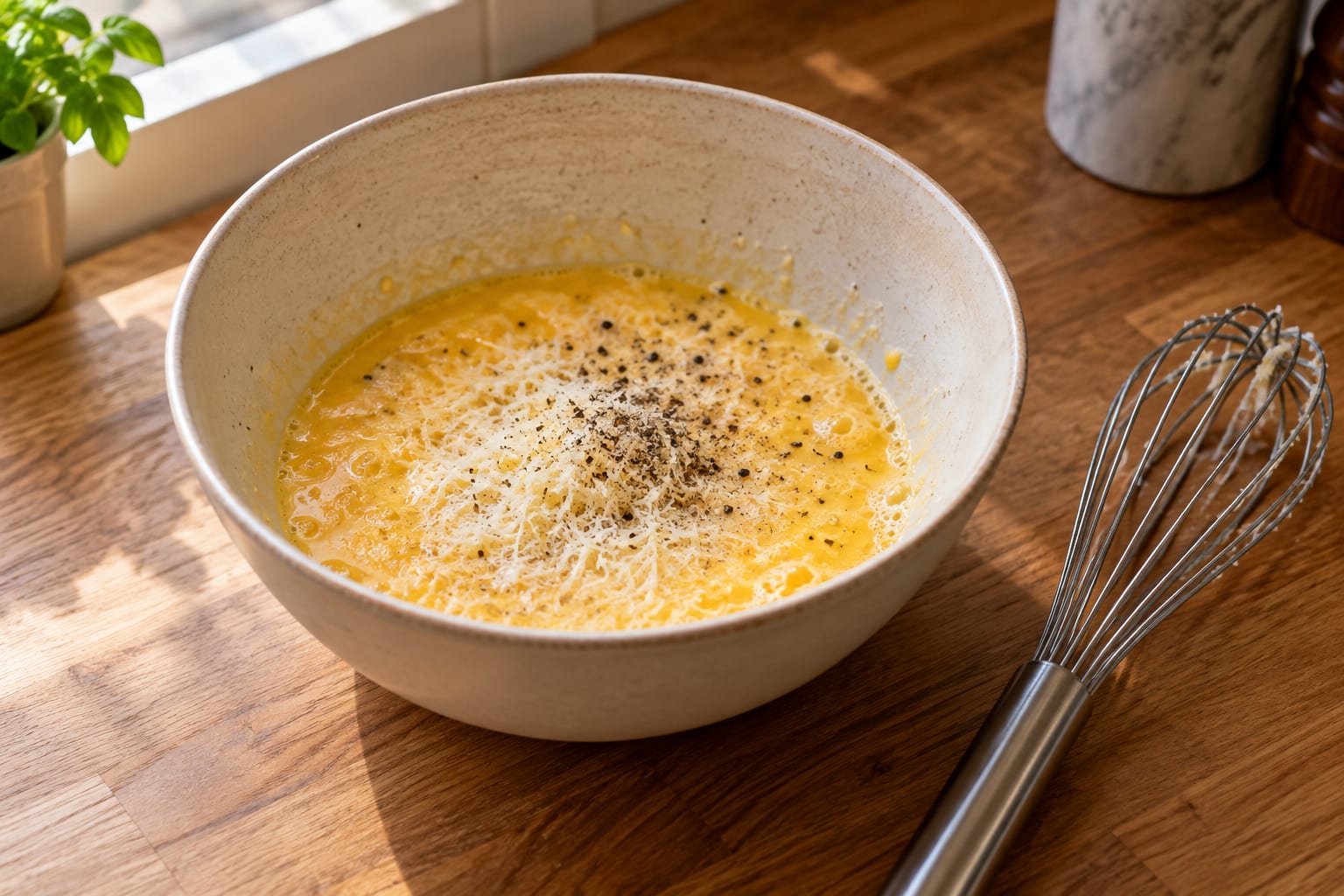 1. Whisk the pasteurized egg and cheese mixture
 2. Render and crisp the guanciale
 3. Boil the spaghetti and reserve cooking water
 4. Toss away from the heat and serve
Watch How To Make It

chefzelish.com
Spaghetti Carbonara with Guanciale
Spaghetti coated in a glossy egg-and-Pecorino sauce, with crisp guanciale and black pepper. No cream; four portions.
Ingredients
0 / 7 readyIngredient amounts for 4 portions
Pasta and guanciale
Egg sauce and finish
Let’s make it.
Whisk the pasteurized egg and cheese mixture
Set aside 10 g of the grated Pecorino and 1 g pepper for the finish. In a large heatproof mixing bowl, whisk 100 g pasteurized whole egg, 34 g pasteurized yolk, the remaining 70 g cheese and 1 g pepper until combined. Use eggs explicitly labelled pasteurized, or plain unsalted pasteurized whole egg and yolk products. Organic or free-range labels do not mean pasteurized. Keep this mixture refrigerated while you start the guanciale and pasta.
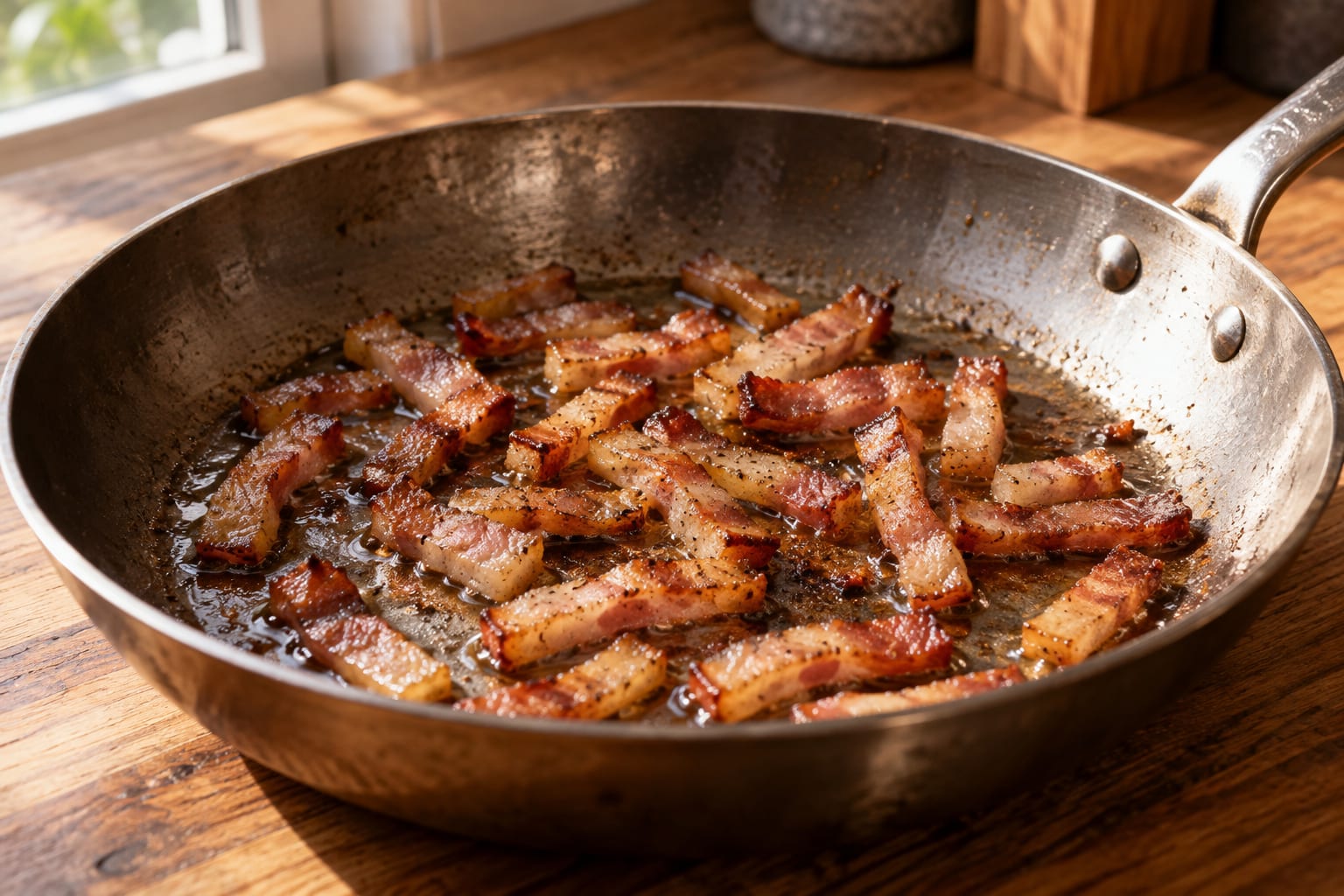
Render and crisp the guanciale
Put all 120 g thin guanciale strips in a wide frying pan over medium-low heat. Cook for about 4–6 minutes, stirring, until the strips are cooked and their edges are golden and crisp. Follow the package cooking instructions if they require longer. Reduce the heat if the strips brown too quickly. Keep all rendered fat in the pan; no oil is needed. Take the pan off the hob.
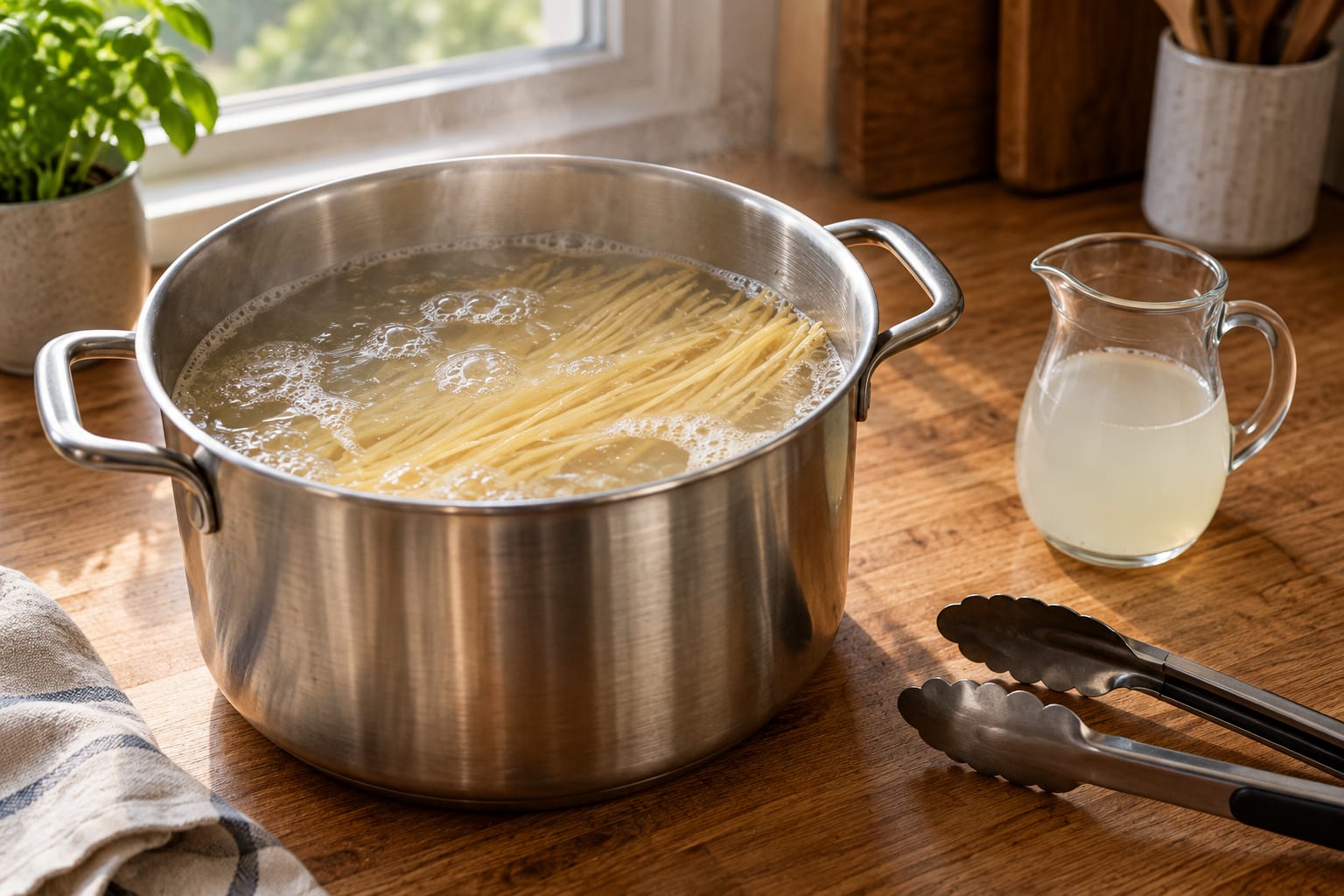
Boil the spaghetti and reserve cooking water
While the guanciale cooks, bring 2 litres of unsalted water to a boil in a large pot. Add all 360 g spaghetti and stir regularly, especially during the first minute. Cook according to the package until al dente, usually about 8–12 minutes. Just before draining, reserve 200 ml cooking water. Drain and put the hot spaghetti into the guanciale pan away from the hob. Toss to coat in the retained fat. Let vigorous sizzling stop before the next step.
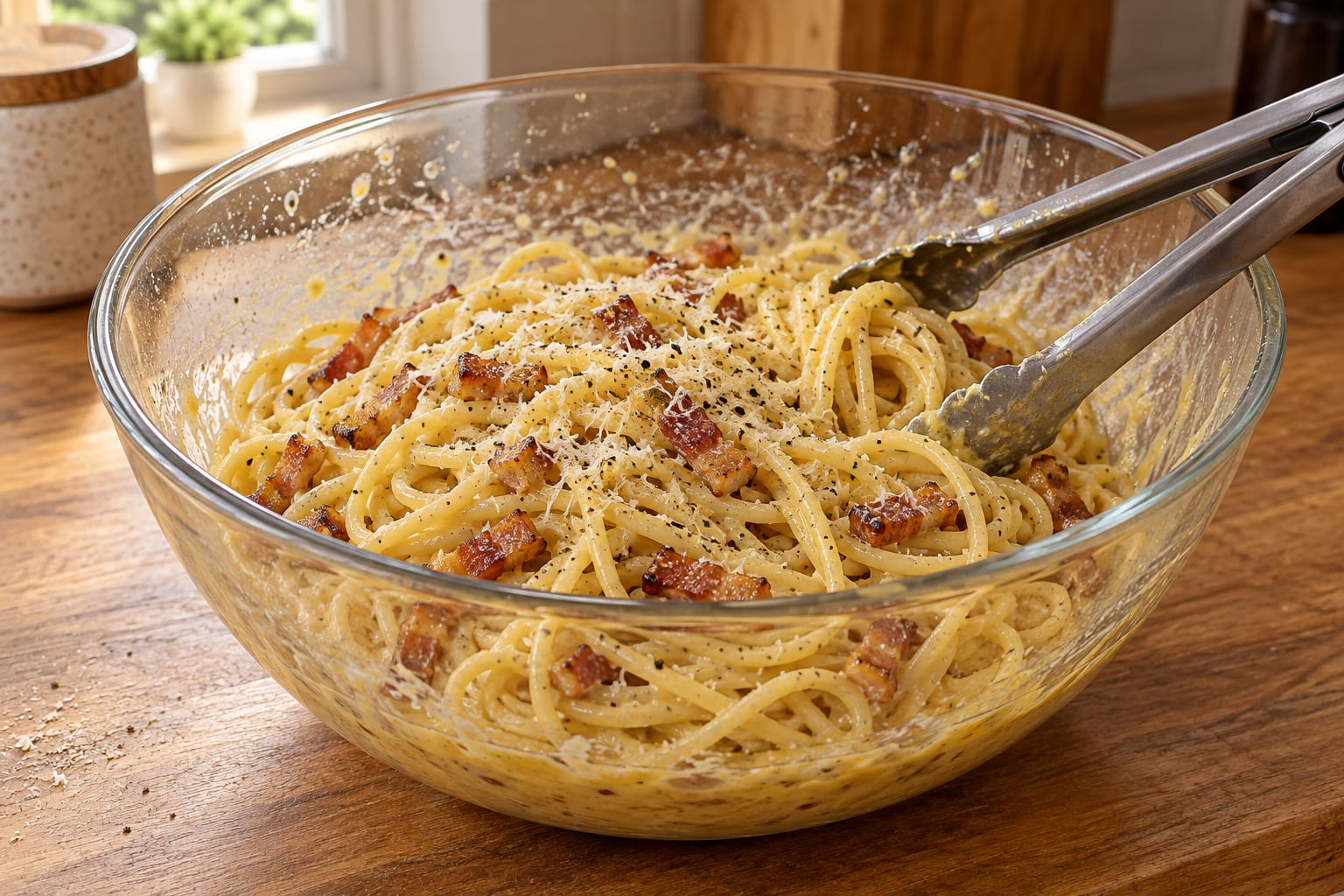
Toss away from the heat and serve
Bring the egg bowl out of the refrigerator. Transfer all spaghetti, guanciale and rendered fat into it. Add 60 ml hot reserved pasta water and toss vigorously with tongs for about 1 minute until the sauce looks glossy and coats the strands. Add more reserved water in 15 ml increments only as needed; you may not need all 200 ml. Do not put the egg bowl over direct heat. Scrape in any sauce or fat left in the pan, divide into four portions and finish with the reserved 10 g Pecorino and 1 g pepper. Serve immediately. This gentle tossing step is not a validated egg pasteurization process; the eggs must already be pasteurized.
Nutrition per serving
1 of 4 equal pasta portions; all listed finishing cheese included. Estimates may vary with ingredients and brands.
- Calories
- 656 kcal
- Protein
- 25.6 g
- Carbohydrates
- 69 g
- Fat
- 30 g
- Saturated fat
- 14 g
- Sugar
- 3 g
- Sodium
- 656 mg
Checked 10/10/2026. Values are per the serving described above, regardless of recipe yield.
Notes from the kitchen.
Helpful tips
About 30 minutes includes overlapping pasta boiling and guanciale cooking. Use package timings and the visual sauce cues rather than treating the clock as a guarantee.
Make it your own
Pasteurized eggs are mandatory for this gently thickened version. Unpasteurized eggs, bacon, Parmigiano or gluten-free pasta are not equivalent ingredient swaps and change the method or nutrition.
Storage & freezing
Refrigerate shallow portions within 2 hours, or 1 hour above 90°F (32°C), at 40°F (4°C) or below. Use within 3 days; reheat throughout to 165°F (74°C). Reheating may change the sauce texture.
At the table
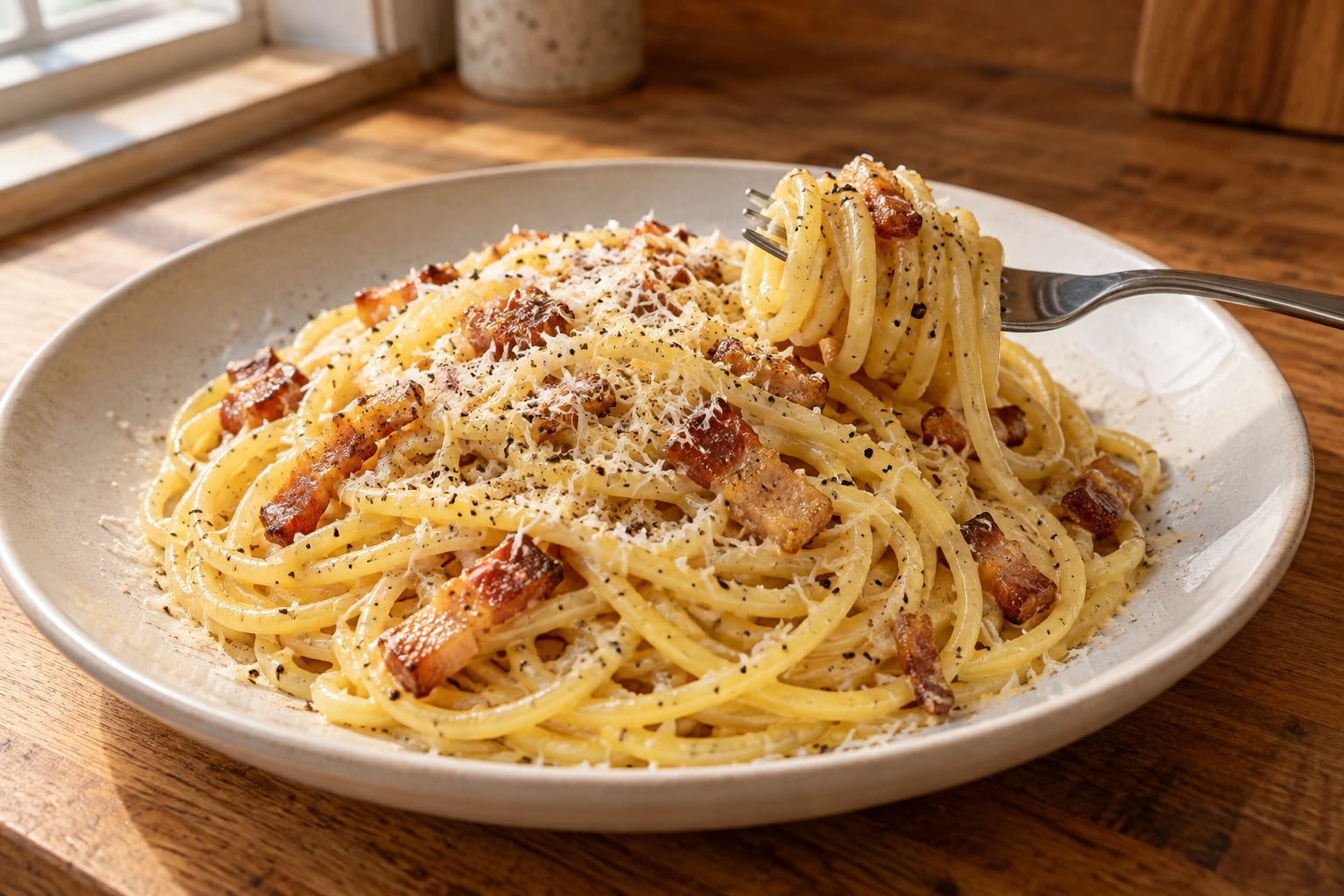
Four equal portions include all spaghetti, guanciale and rendered fat, eggs, 80 g cheese and 2 g pepper. Bread, salad, extra cheese and other sides are excluded.
A little something delicious.
Keep this recipe close for the next time the craving strikes.
Something else you’ll love.
Lemon Ricotta Rigatoni with Peas
Get the recipe
Beef Lasagna with Spinach and Ricotta
Get the recipe
0 Comments
No ratings yet
No comments yet. Have a question or tried this recipe? Leave a comment above.