
Pastiera Napoletana
An Italian Easter tart with buttery pastry, creamy ricotta, tender wheat grains and orange blossom. A golden lattice tops this make-ahead Neapolitan dessert.
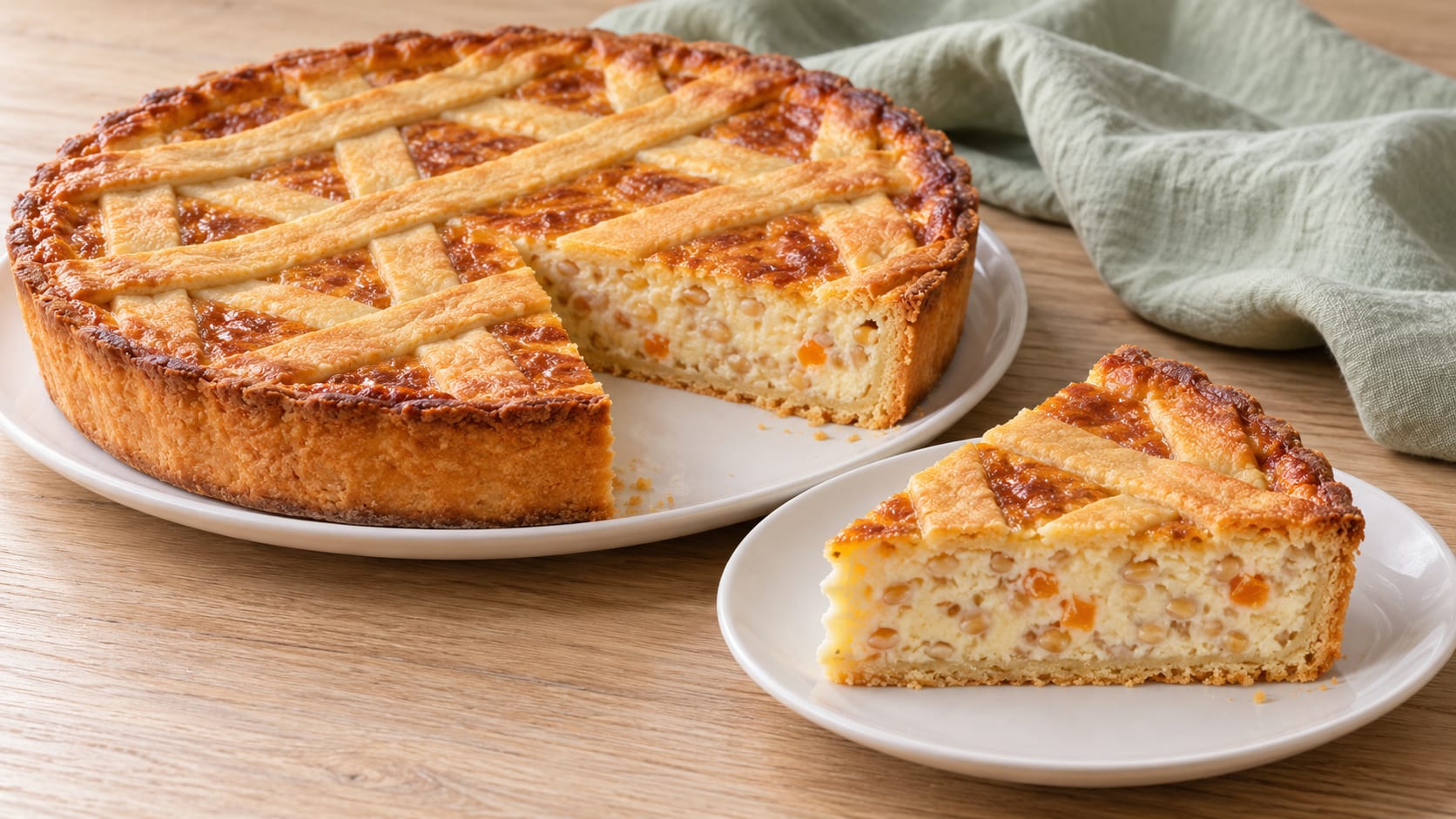
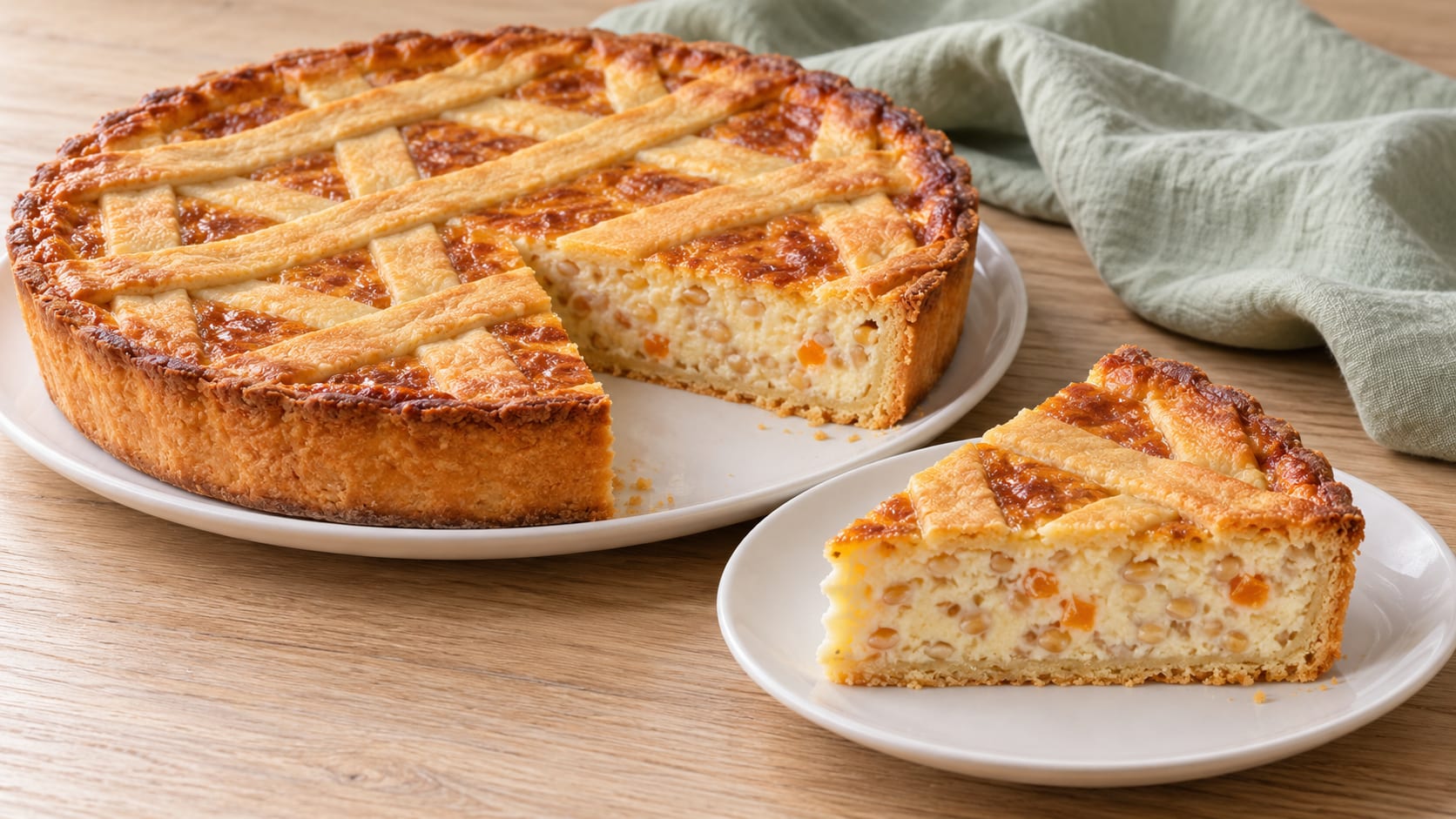
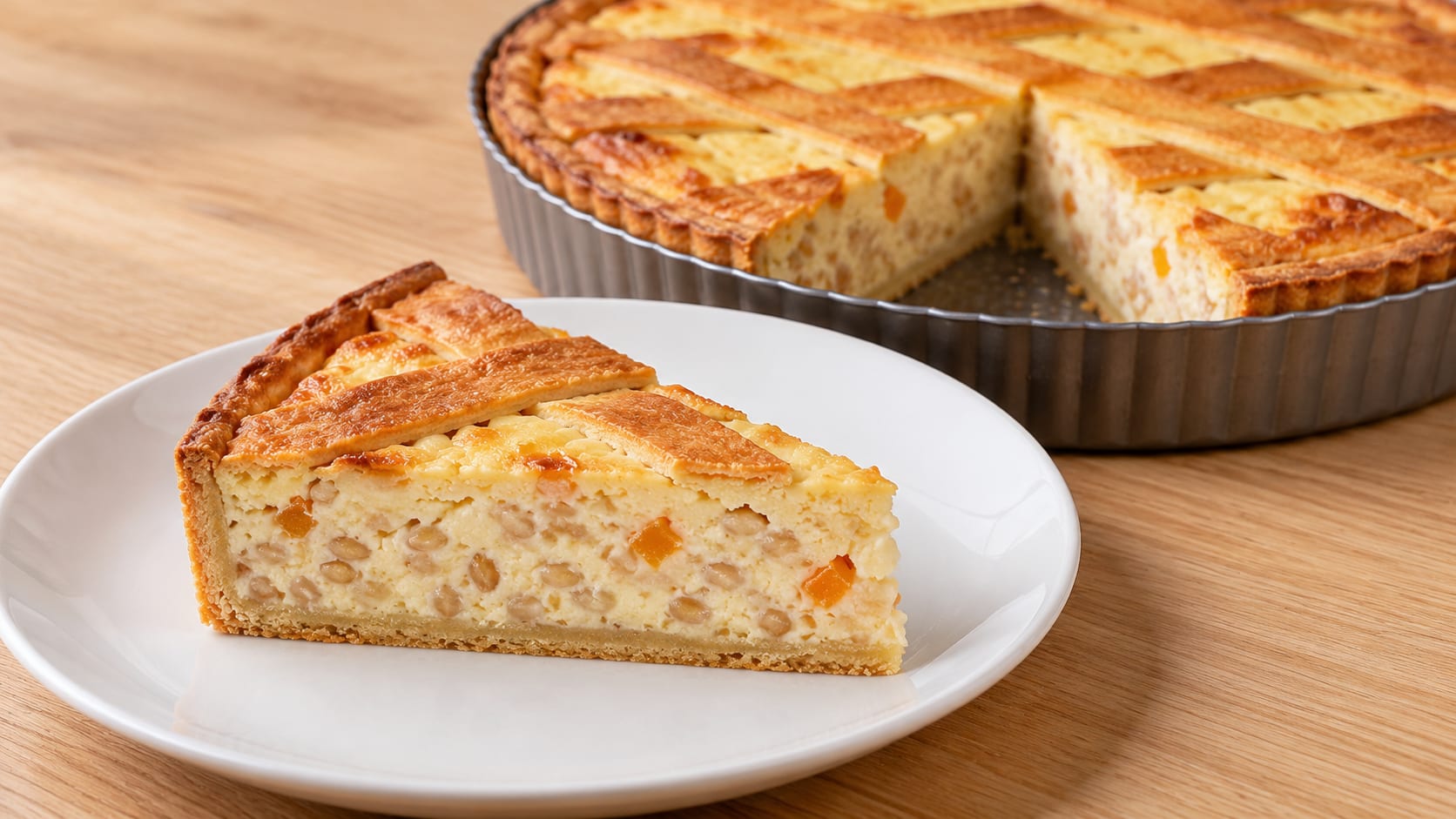
Pastiera is a sweet Easter tart associated with Naples. Its filling combines ricotta with soft cooked wheat, so each slice has a gentle grain texture rather than the smoothness of a cheesecake. Orange blossom water and little pieces of candied orange give this version its fragrance.
This original formulation uses an all-butter pastry and whole-milk cow’s-milk ricotta. Prepare it a day before serving: the filling needs a long refrigerated rest to slice neatly. Start with ready-cooked grano cotto, not dry wheat, bulgur or breakfast cereal. This recipe has not been kitchen-tested.
Why you’ll love this recipe
A refrigerated pastry shell holds its shape while the filling bakes. Cooking the wheat briefly in milk makes it creamy without removing all the grains. Cooling that mixture before adding eggs protects the filling from premature curdling. Gentle mixing keeps excess air out, and an overnight chill firms the baked tart before cutting.
Before you start · Equipment
Kitchen scale, fine sieve, bowls, small saucepan, spatula, rolling pin, baking parchment, ungreased nonstick 24 cm metal tart tin at least 4 cm deep with removable base, baking tray, small knife, food thermometer and cooling rack.
Everything you’ll need.
Get your ingredients ready, then follow the quantities in the recipe below.
See ingredient amounts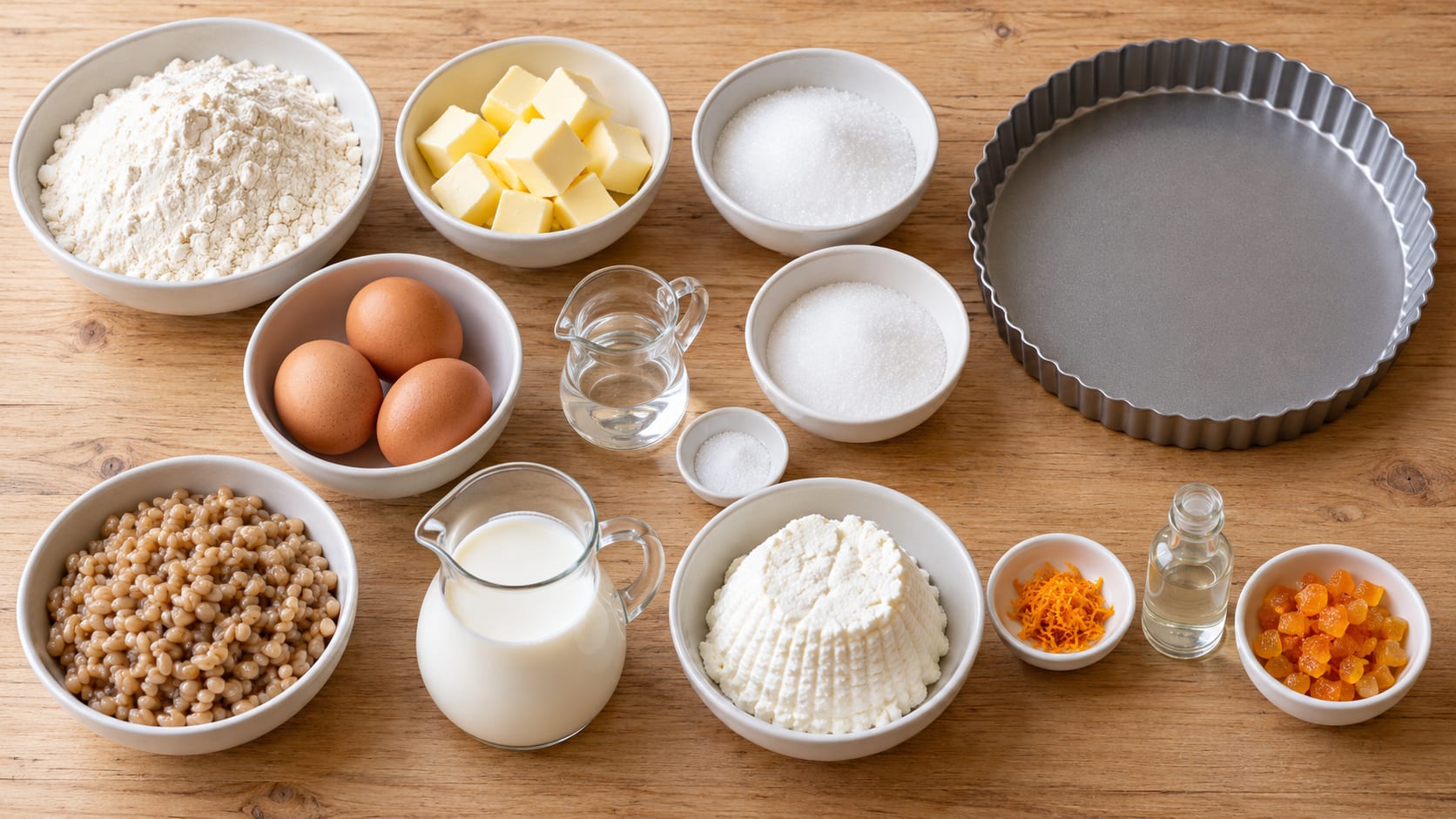
This guide describes the original 10 slices from one 24 cm tart. Use the recipe card for amounts adjusted to your chosen yield.
A Neapolitan Easter dessert
Pastiera combines a pastry shell with a ricotta-and-wheat filling. This version keeps the recognizable orange-blossom character while using an all-butter dough and cow’s-milk ricotta. It is an original formulation, not a claim to a single definitive family recipe.
Plan the draining and chilling
Begin draining ricotta at least four hours ahead. Make the tart the day before serving so the finished filling can chill for at least eight hours. Refrigeration is part of both the method and storage, not an optional room-temperature rest.
Keep the grains visible
The milk softens the ready-cooked wheat into a creamy mixture. Stir while simmering and cool it promptly in a shallow container. Soft grains should remain visible through the ricotta rather than disappear into a smooth custard.
Make a simple crossing lattice
Lay four strips in one direction and three in the other. There is no need to weave them. Roll the dough cold and patch cracks before filling; re-use the trimmings in the strips and rim.
Bake by texture and temperature
The stated time is a guide. A set center has a gentle unified tremble rather than a liquid ripple. Confirm at least 71°C/160°F in the center and shield a darkening top with foil if needed.
Serve after an overnight chill
A cold, firm tart releases from the tin more easily and makes cleaner slices. Share the pastry and filling across ten portions. No decorative topping is included, keeping the ingredient list and nutrition consistent.
About the ingredients
- Ready-cooked wheat
Look for grano cotto specifically intended for pastiera. Weigh 250 g of the stirred, undrained product. Dry wheat, bulgur, rice and semolina have different hydration and cooking requirements. This formula does not give them identical quantities or timings.
- Ricotta after draining
Use pasteurized whole-milk cow’s-milk ricotta. Start with more than 300 g, drain in the refrigerator and weigh the retained cheese. Moisture varies by brand; a wet ricotta can make the center loose. Sheep’s-milk ricotta changes flavor and nutrition.
- Floral water and orange peel
The 5 g quantity is for unsweetened distilled orange blossom water, not concentrated flavoring. Use only a food-grade product. Add 4 g fine fresh orange zest and 40 g diced candied peel as listed; no orange juice or separate syrup is added.
- A tender butter pastry
Cold butter is rubbed into the dry ingredients before the measured egg and water are added. All 260 g flour, 125 g butter and 85 g sugar belong in the pastry. Roll between parchment so extra dusting flour is unnecessary.
- Eggs by edible weight
Use 50 g beaten whole egg for the pastry and a separate 100 g for the filling. Shells are excluded. The filling eggs are mixed in two 50 g additions. There is no egg wash, extra yolk or raw garnish.
- The right tin
Use a 24 cm nonstick metal tart tin at least 4 cm deep, on a tray. A shallow tart pan or smaller diameter may overflow. A ceramic pie dish changes heat transfer; the stated baking estimate is for metal.
How to make Pastiera Napoletana
Drain ricotta in the refrigerator. Make and chill the butter pastry. Simmer ready-cooked wheat with milk, then cool quickly. Mix ricotta, sugar, eggs, orange zest, orange blossom water and candied orange; fold in the cold wheat cream. Line the tin, fill, lay seven pastry strips in two crossing directions and bake at 170°C/340°F conventional until set and at least 71°C/160°F in the center. Refrigerate within two hours of baking and chill overnight before slicing.
 1. Drain the ricotta; make and chill the pastry
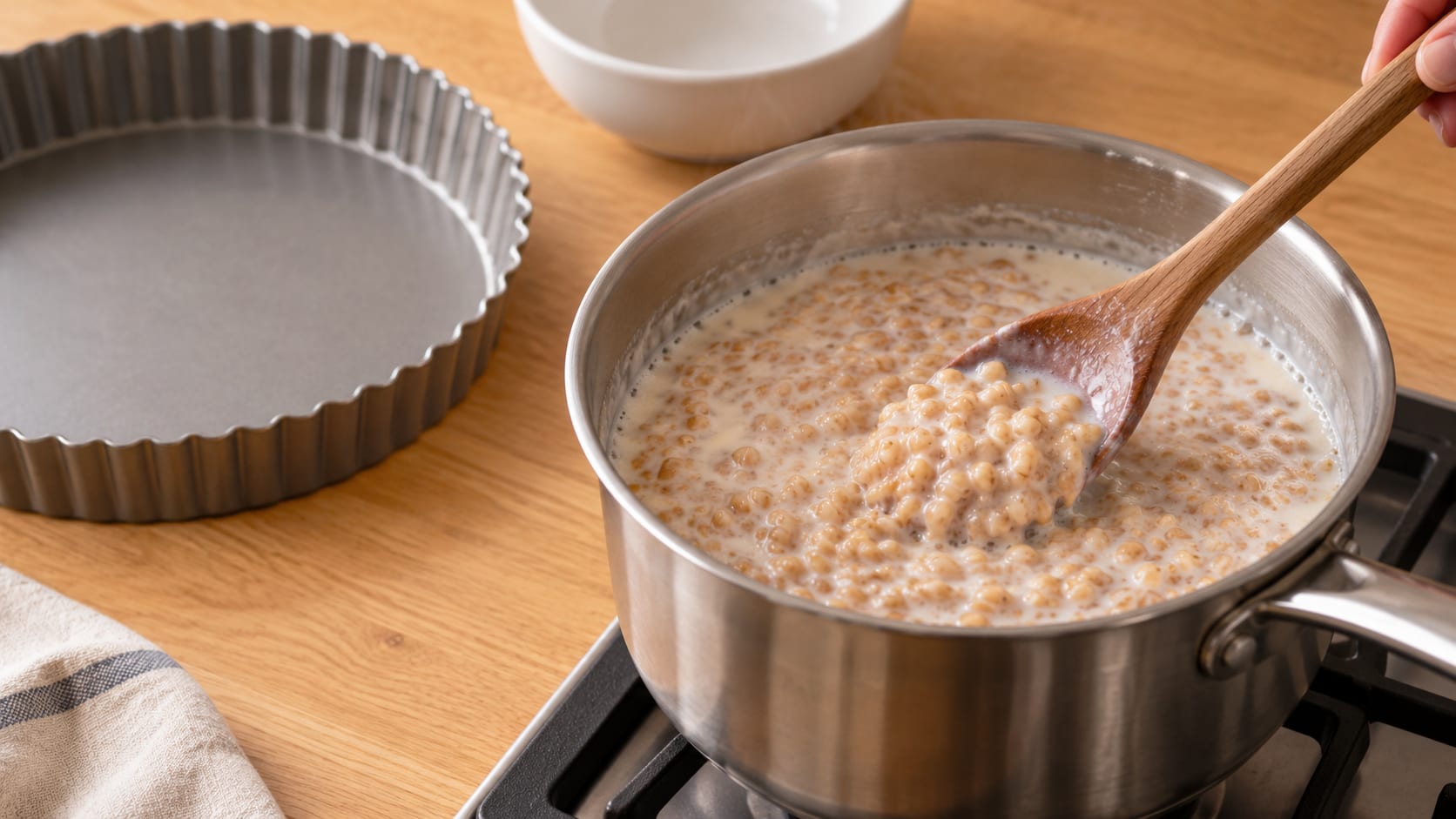 2. Cook the wheat cream and cool it promptly
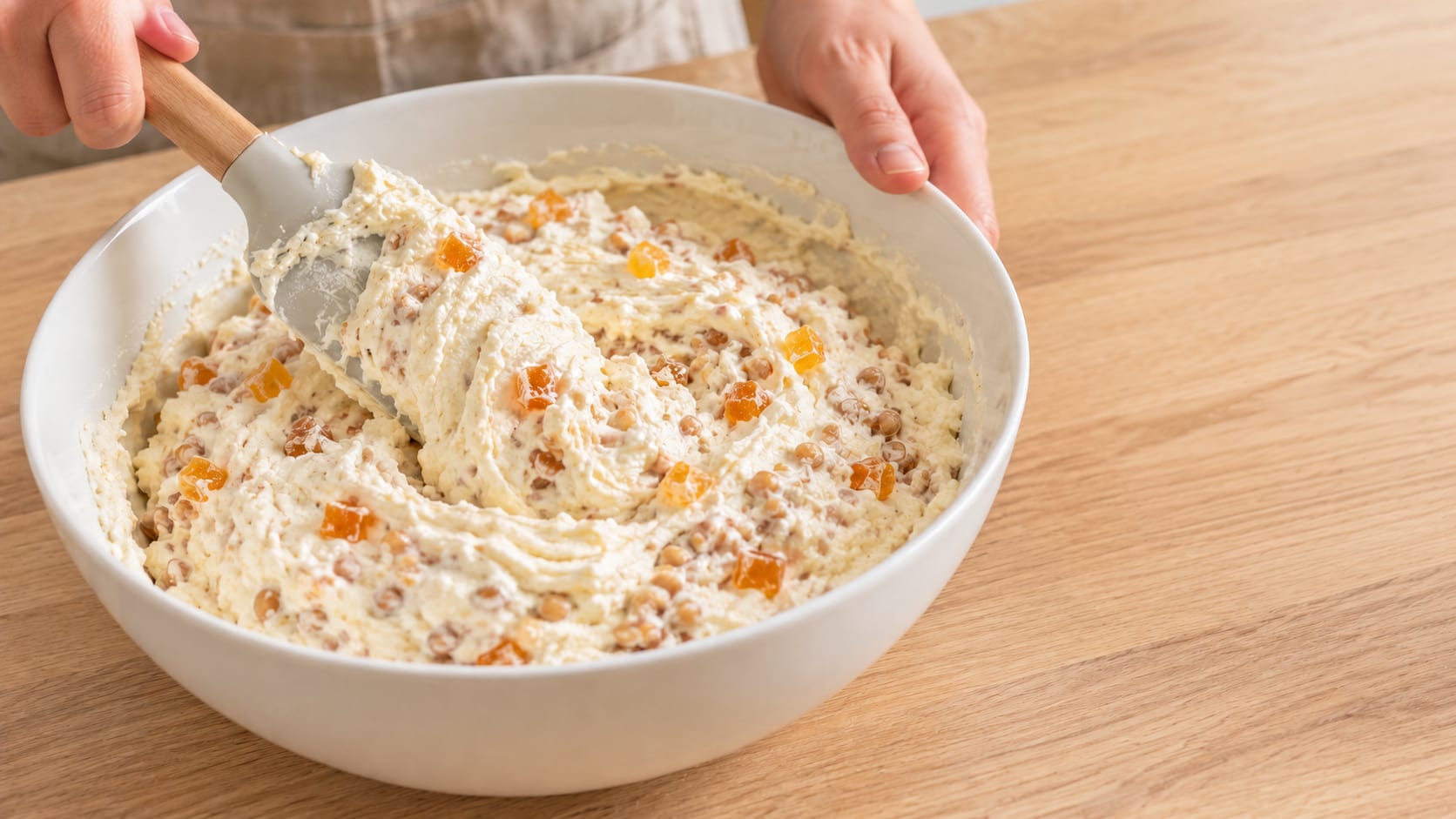 3. Build the orange-scented ricotta filling
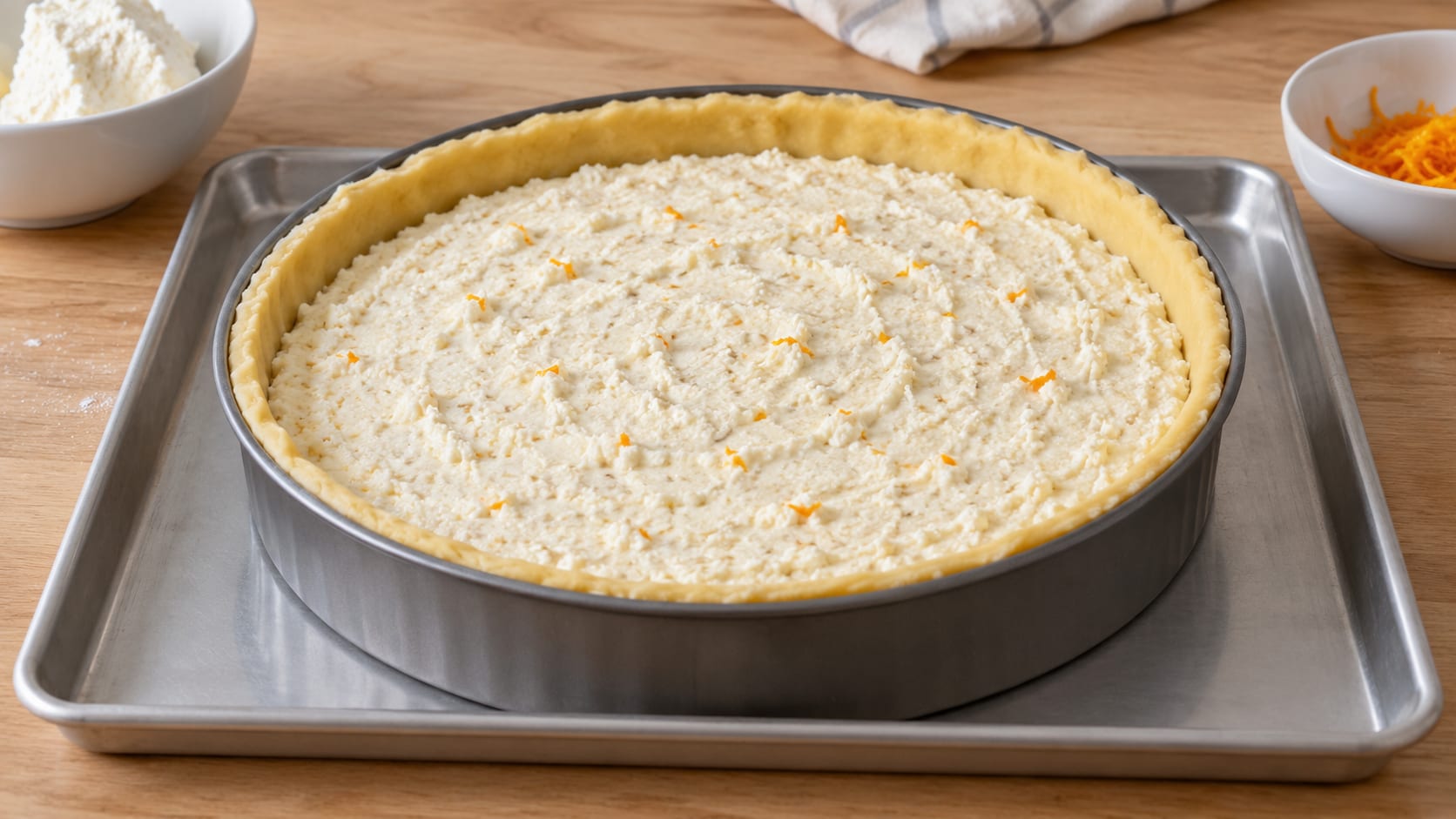 4. Line the tin and add the filling
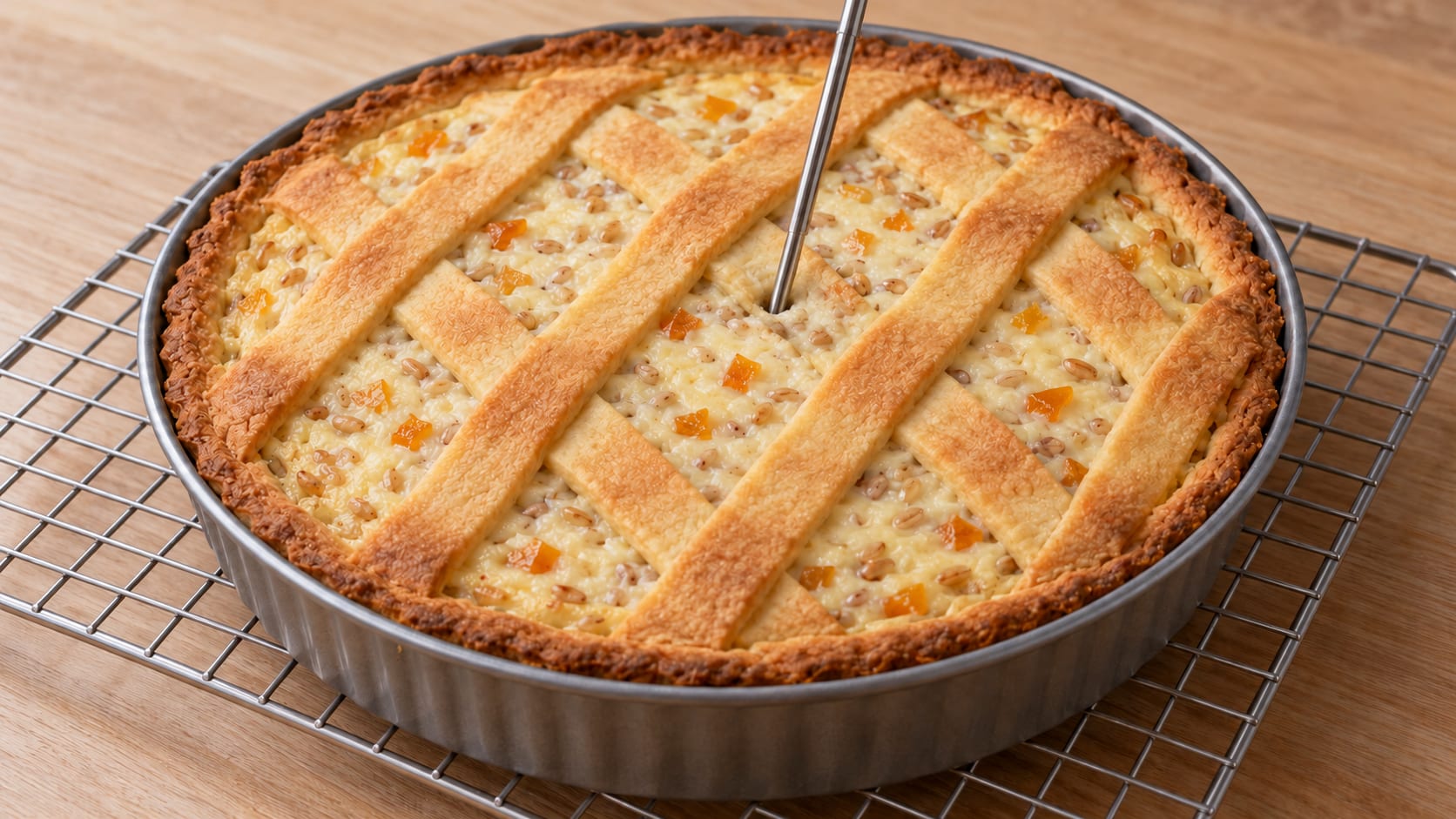 5. Add seven strips and bake until set
 6. Cool briefly, refrigerate overnight and slice
Watch How To Make It

chefzelish.com
Pastiera Napoletana
An Italian Easter tart with buttery pastry, creamy ricotta, tender wheat grains and orange blossom. A golden lattice tops this make-ahead Neapolitan dessert.
Ingredients
0 / 14 readyIngredient amounts for 10 slices from one 24 cm tart
All-butter pastry
Wheat cream and ricotta filling
Let’s make it.
- Pastry and filling
Drain the ricotta; make and chill the pastry
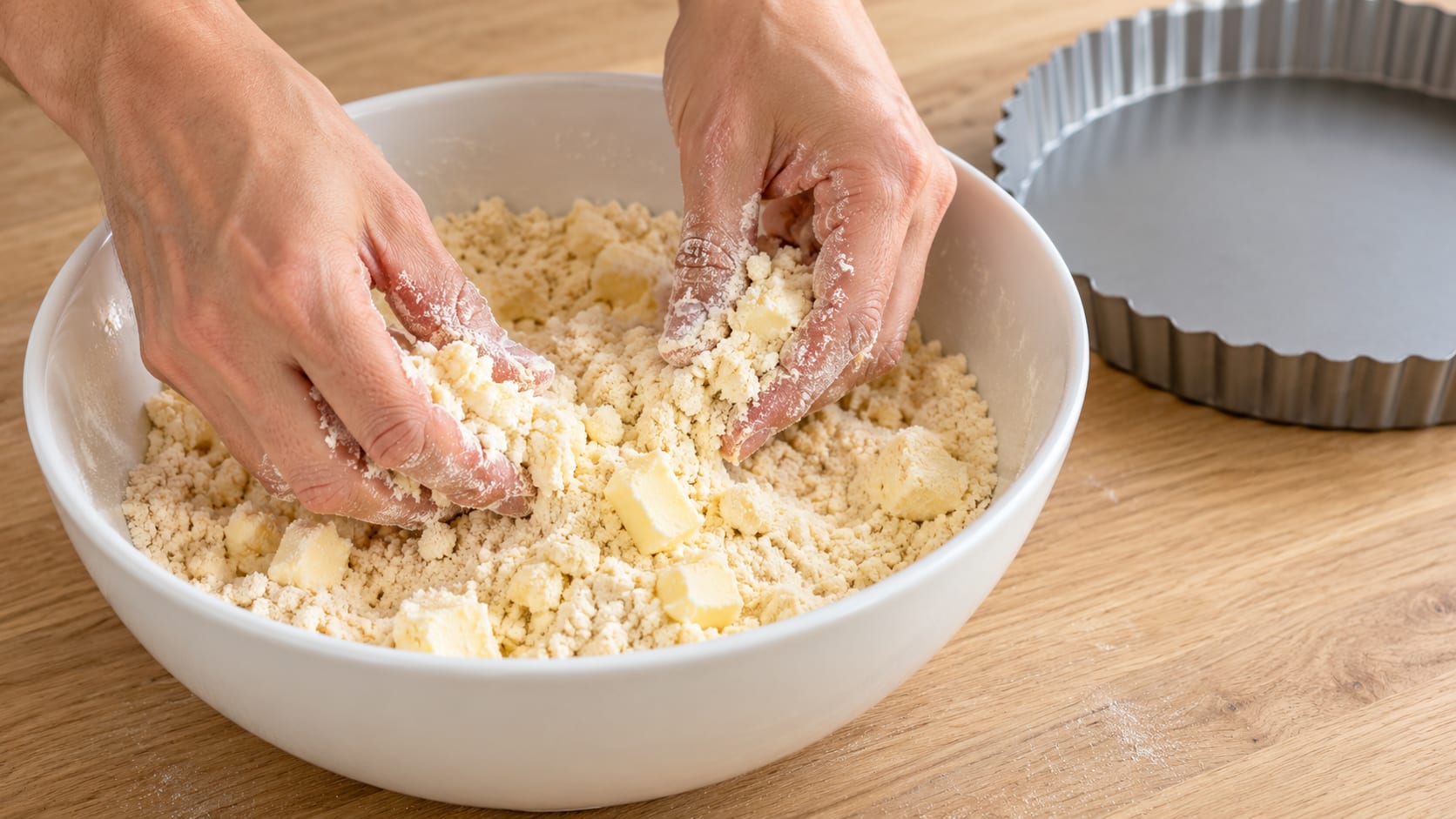
Four hours before mixing the filling, put ricotta in a fine sieve over a bowl, cover and refrigerate at 4°C/40°F or below. Weigh 300 g after draining; the discarded whey is not part of this recipe. For the pastry, mix 260 g flour with 85 g sugar and 2 g salt. Rub in 125 g cold cubed butter with fingertips until the mixture is sandy with a few small flakes. Add 50 g beaten egg, then all 10 g cold water. Bring together with a spatula and press into a flat disc without kneading smooth. Wrap and refrigerate for 60 minutes. Do not taste raw pastry. The ricotta draining is advance preparation, separate from the displayed hands-on time.
- Pastry and filling
Cook the wheat cream and cool it promptly
Stir the jar of ready-cooked grano cotto, then weigh 250 g including its soft starchy coating. Do not rinse it or substitute 250 g dry wheat. Put it in a small saucepan and add all 150 g whole milk. Bring to a gentle simmer over medium-low heat, stirring, then cook gently for 8–10 minutes until creamy and spoonable. Keep the grains partly intact; it should not become dry or a smooth puree. Spread in a shallow bowl, let steam subside for about 10 minutes, then refrigerate until cool, about 30 minutes. Refrigerate promptly rather than leaving the milk mixture on the counter.
- Pastry and filling
Build the orange-scented ricotta filling
Press the drained 300 g ricotta through a clean sieve into a bowl. Stir in 125 g sugar until evenly mixed. Add the first 50 g of the beaten filling eggs and stir gently; add the remaining 50 g and mix again. Stir in 4 g finely grated orange zest, then 5 g food-grade orange blossom water. Fold in 40 g finely diced candied orange peel. Finally fold in all the cooled wheat-and-milk mixture, scraping the bowl. The filling should be creamy with visible soft grains and orange pieces. Avoid whipping in air. Keep covered in the refrigerator while rolling the pastry, and do not taste the raw-egg filling.
- Assemble, bake and chill
Line the tin and add the filling
Heat the oven to 170°C/340°F conventional. Put an ungreased nonstick 24 cm metal tart tin, at least 4 cm deep with a removable base, on a baking tray. Reserve about one quarter of the cold pastry for the lattice. Roll the larger piece between parchment sheets to roughly 3–4 mm thick, wide enough for the base and sides. Peel off the paper, line the tin without stretching the dough, and press cracks closed. Trim flush with the rim and add trimmings to the reserved pastry. Prick the base lightly with a fork without piercing right through. Pour in all the filling and level it; it should sit below the rim. Keep chilled if the pastry softens. This filled tart bakes without a separate blind-baking step.
- Assemble, bake and chill
Add seven strips and bake until set
Roll the reserved pastry and all trimmings between parchment. Cut seven strips about 1.5–2 cm wide, sized to span the tart, re-rolling scraps as needed. Lay four parallel strips diagonally across the filling, then lay three in the opposite direction to make diamond openings; the strips cross without weaving. Press the ends onto the pastry rim. Use remaining tiny scraps to patch or reinforce the rim so no edible pastry is discarded. Bake on the lower-middle shelf for about 70–85 minutes. Start checking after 65 minutes. The lattice should be golden and the center should move together with a slight tremble, not ripple like liquid. Check the filling center through a lattice opening with a clean thermometer: it must reach at least 71°C/160°F. If the top colors too fast, tent loosely with foil and continue baking. Color alone is not a safety test.
- Assemble, bake and chill
Cool briefly, refrigerate overnight and slice
Set the tin on a rack for about 60 minutes, then move it to the refrigerator even if still slightly warm; do not wait hours for it to become completely cold on the counter. Refrigerate within 2 hours of leaving the oven, or within 1 hour if the room is above 32°C/90°F. Chill uncovered until cold, then cover and refrigerate for at least 8 hours, preferably overnight. The displayed 600 minutes of rest allows pastry chilling, cooling and the final 8-hour chill; the separate 4-hour ricotta drain starts beforehand. Once fully cold and firm, remove the tin sides carefully and cut ten slices with a clean knife. Serve plain, without icing sugar, cream, fruit or extra garnish. Keep at 4°C/40°F or below and eat within 3–4 days of baking. Return the tart to the refrigerator promptly after serving.
Nutrition per serving
1 of 10 slices, including all pastry and filling; ingredient-based estimate. Estimates may vary with ingredients and brands.
- Calories
- 381 kcal
- Protein
- 9.4 g
- Carbohydrates
- 49.6 g
- Fat
- 16.3 g
- Saturated fat
- 9.6 g
- Fiber
- 1.3 g
- Sodium
- 151 mg
Checked 10/27/2026. Values are per the serving described above, regardless of recipe yield.
Notes from the kitchen.
Helpful tips
Plan 50 minutes hands-on, about 90 minutes cooking including wheat cream and a 70–85 minute bake, and about 600 minutes chilling/cooling. Start ricotta draining at least 4 hours beforehand. Oven temperature is 170°C/340°F conventional. Bake until the filling center reaches at least 71°C/160°F and is set.
Make it your own
Contains wheat/gluten, milk and eggs. Check packaged wheat and candied peel for additional allergen warnings. Use ready-cooked grano cotto, drained pasteurized whole-milk ricotta and food-grade orange blossom water; do not replace the floral water with concentrated essence at the same dose.
Storage & freezing
Keep ricotta, filling and cooked wheat cream refrigerated at 4°C/40°F or below. Never taste raw dough or egg filling. Refrigerate the baked tart within 2 hours, or 1 hour above 32°C/90°F. Chill at least 8 hours before cutting; use within 3–4 days of baking. Do not store this dairy-and-egg tart at room temperature for several days.
At the table
Ten slices include all pastry and filling. Drained ricotta weight excludes discarded whey. Nutrition is an ingredient-based estimate using a specified cooked-wheat label reference and generic candied-fruit and floral-water proxies; moisture, brand variation and actual baked slice weight are unmeasured. No icing sugar, egg wash, cream or food garnish included.
A little something delicious.
Keep this recipe close for the next time the craving strikes.
Something else you’ll love.
Baked Zeppole di San Giuseppe
Get the recipe
Risotto allo Zafferano
Get the recipe
0 Comments
No ratings yet
No comments yet. Have a question or tried this recipe? Leave a comment above.