
Roasted Eggplant Parmesan with Basil
Tender roasted eggplant layered with a thick tomato sauce, mozzarella and Parmesan, then baked until golden. A comforting main dish with no breading or frying.
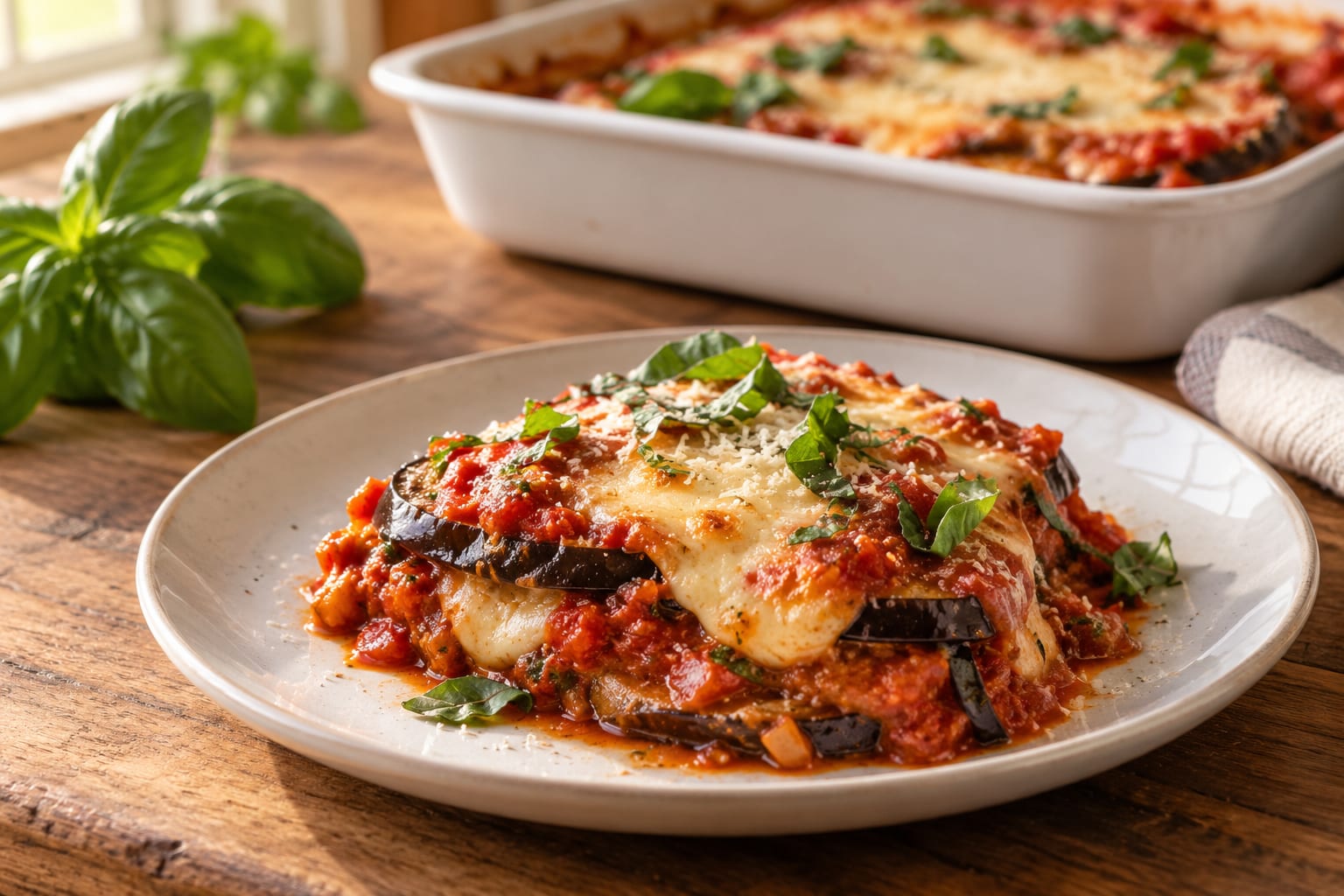
Eggplant is the center of this bubbling oven bake. Long slices become soft and lightly browned in the oven, then go into a casserole with a homemade tomato sauce and two cheeses. Fresh basil brings a bright finish to the savory layers.
This version uses measured olive oil and skips the flour, eggs and breadcrumb coating. Roast the eggplant while the tomato sauce simmers, then assemble two generous layers in a rectangular dish. A short rest after baking makes it easier to portion, although the finished slices stay soft and rustic rather than firm like a cake.
Why you’ll love this recipe
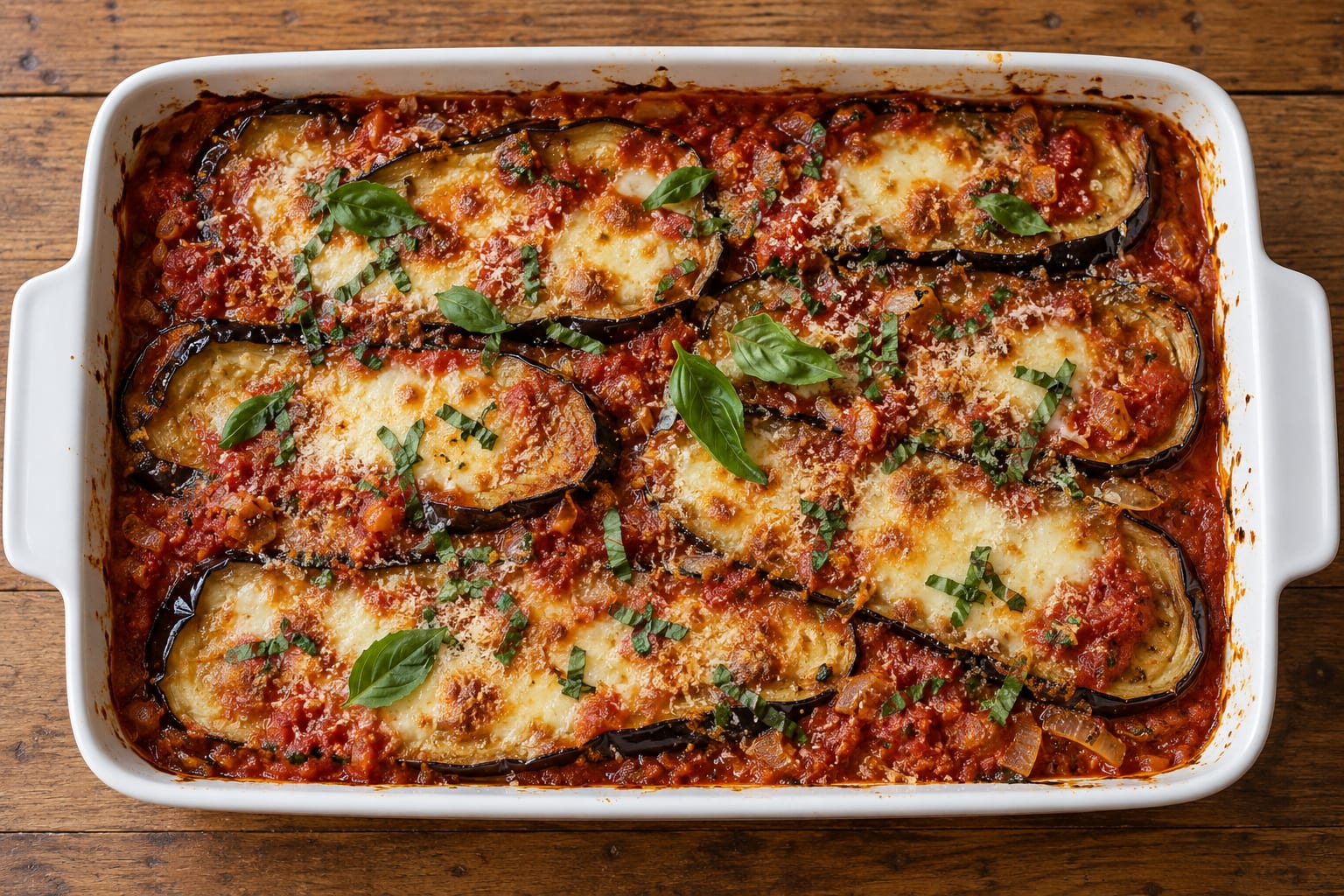
Roasting the slices before assembly softens the flesh and drives off some moisture. Simmering the tomato sauce uncovered gives it enough body to cling to the eggplant. Low-moisture mozzarella melts without adding the water of fresh mozzarella, while Parmesan seasons the layers. Resting the casserole briefly lets the sauce settle before serving.
Before you start · Equipment
Kitchen scale; sharp knife and board; two large rimmed metal sheet pans; oven-safe parchment rated for 425°F (220°C); pastry brush; saucepan; wooden spoon; 9 x 13-inch (23 x 33 cm) oven-safe baking dish, at least 2 inches (5 cm) deep; grater; spatula; wire rack; oven mitts.
Everything you’ll need.
Get your ingredients ready, then follow the quantities in the recipe below.
See ingredient amounts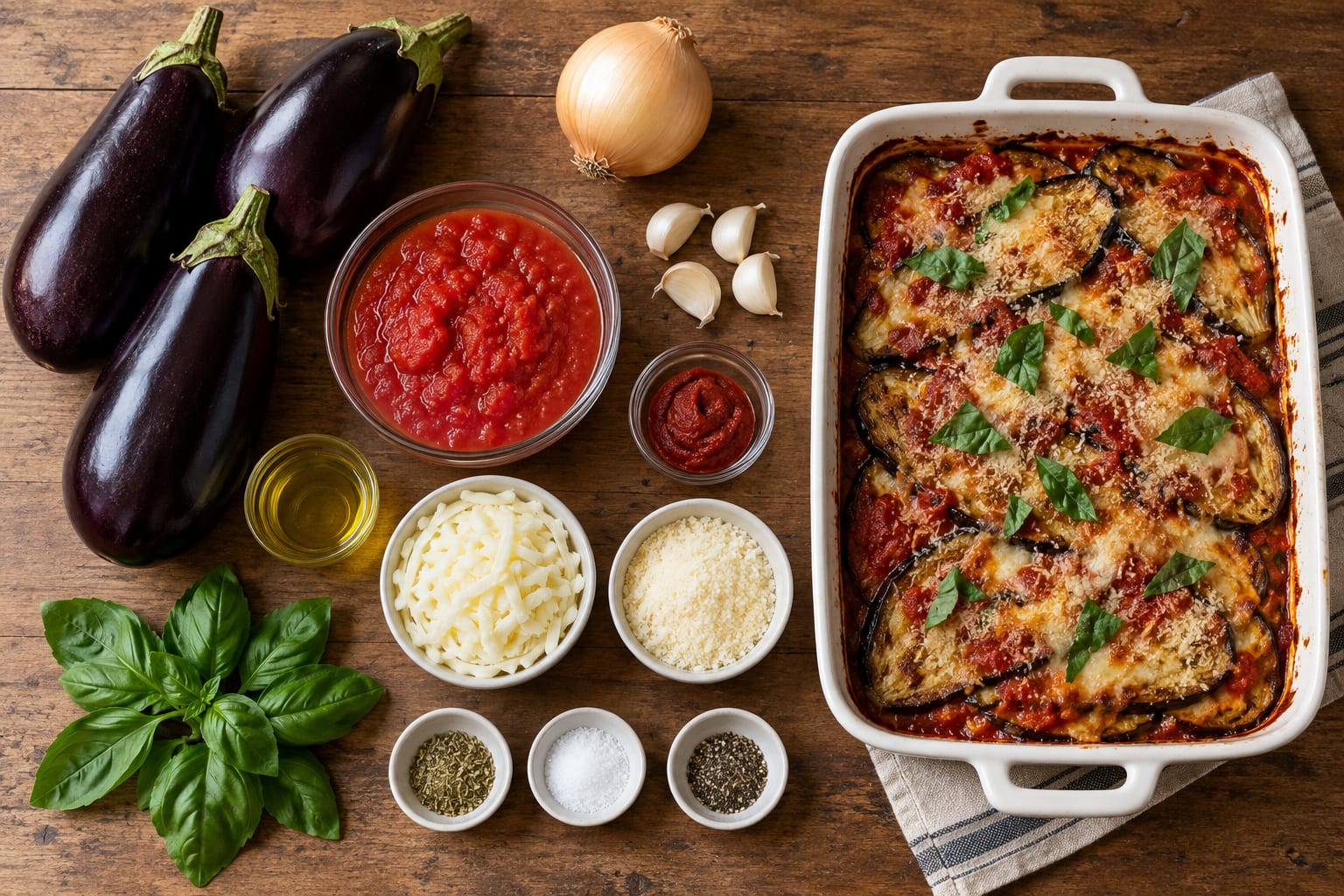
This guide describes the original 6 portions. Use the recipe card for amounts adjusted to your chosen yield.
Soft eggplant without a fried coating
The eggplant is roasted without flour, egg or breadcrumbs. Its flesh should already be soft before it enters the casserole. A pale, stiff slice needs longer on the sheet pan; the final bake should heat the assembled layers rather than rescue undercooked vegetables.
Give the sauce time to thicken
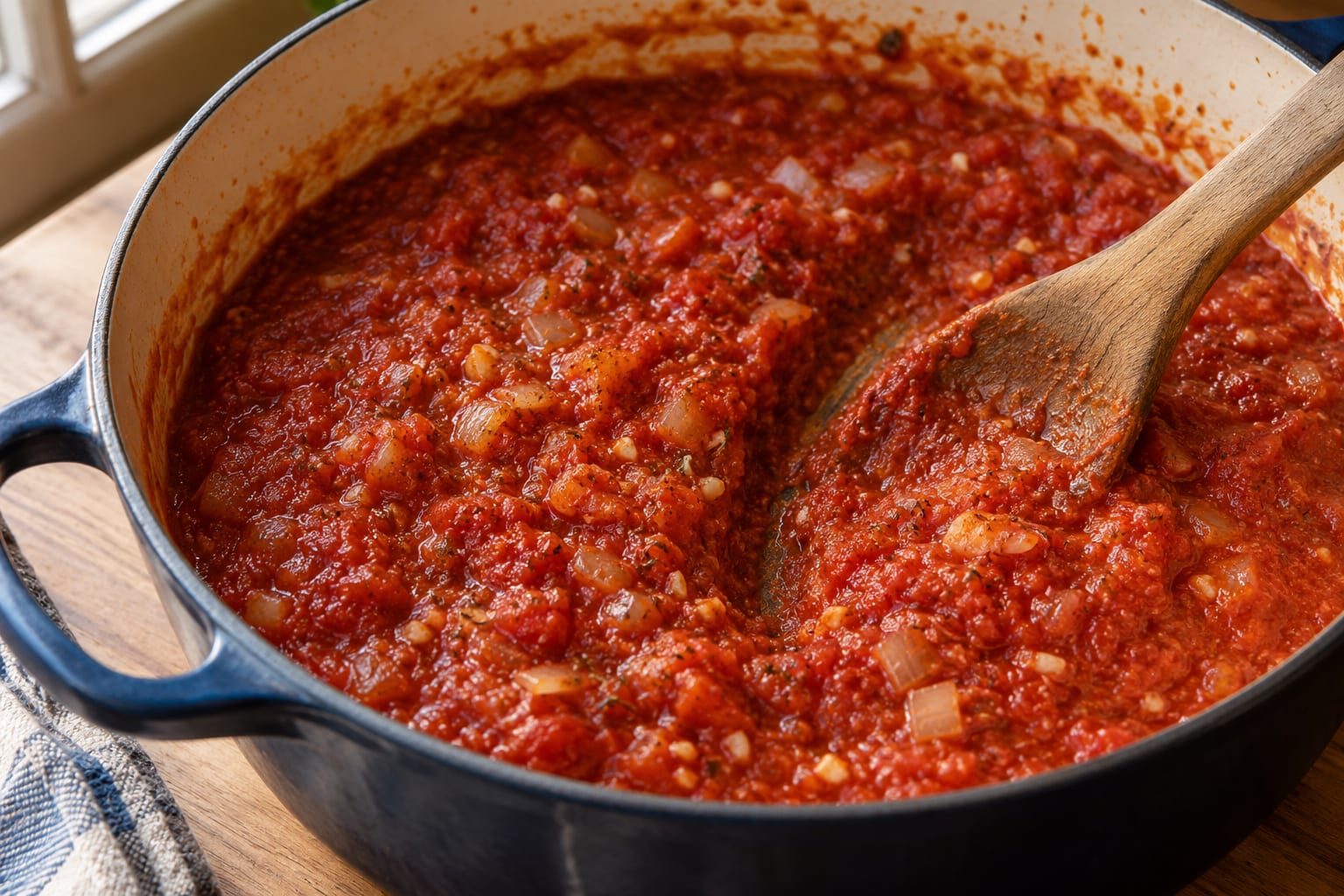
Tomato brands differ in water content. Keep the simmer gentle and stir along the bottom as the sauce reduces. A spoon should leave a brief channel behind it. Very watery sauce will pool beneath the finished casserole; sauce reduced to a dry paste will not spread well.
Two layers in the specified dish
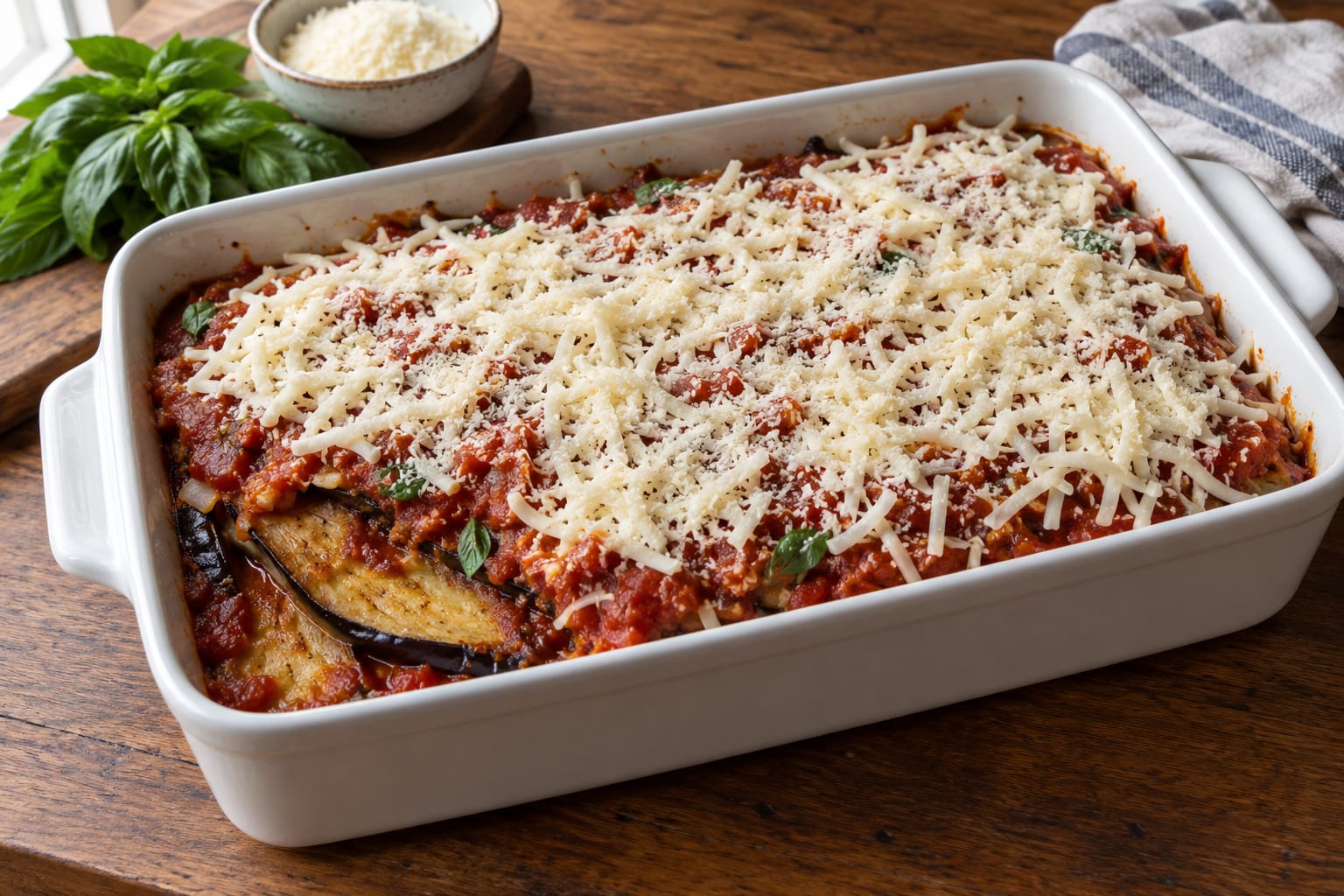
Use the stated rectangular dish and divide the roasted eggplant roughly in half. A deeper, narrower dish changes both thickness and heating time.
- Avoid overlapping the raw slices on the roasting trays; use batches if necessary.
- Use low-moisture mozzarella for the recipe as written.
- Check that the center is hot before removing the casserole, then give it the full 10-minute rest.
What to serve with eggplant parmesan
Serve a portion with a simple green salad or a piece of Olive Oil Focaccia with Sea Salt. The focaccia can soak up the tomato sauce at the edge of the plate. Bread, salad dressing and other accompaniments are additional to the listed nutrition.
Store and reheat leftovers
Refrigerate leftovers in shallow covered containers within 2 hours, at 40°F (4°C) or below, and use within 3–4 days. Reheat individual portions until they reach 165°F (74°C) throughout. Freeze cooled portions for up to 2 months for best quality; thaw in the refrigerator before reheating. Basil and the eggplant texture soften further after storage.
Common eggplant parmesan questions
Is this breaded? No, the slices are brushed with oil and roasted. Is there pasta? No, the two layers are eggplant. Can I use fresh mozzarella? Its extra water changes the casserole, so low-moisture mozzarella is the recommended choice. Do I peel the eggplant? Leave the skin on after trimming the stems. Is it vegetarian? Choose both cheeses made with vegetarian rennet. Can I make it in a small dish? Use the stated size for the described layers and baking times.
About the ingredients
- Eggplant
Use firm eggplants with smooth skin. Weigh 1,200 g after trimming the stem ends and leave the skin on to support the slices. Similar thickness helps all the slices soften at the same rate. This method does not include a separate salt-and-drain stage.
- Canned tomatoes and paste
Use no-salt-added tomatoes with all their juice, then crush them finely. The tomato paste adds body. Simmer uncovered until the sauce thickens instead of relying on a fixed minute count. Salted products will change the sodium estimate.
- Measured olive oil
Use 50 g total: 35 g brushed across both sides of the slices and 15 g in the sauce. A brush distributes the roasting oil more evenly than pouring it on. The nutrition calculation counts all the oil even if a little remains on the parchment.
- Low-moisture mozzarella and Parmesan-style cheese
Grate a low-moisture part-skim mozzarella block for the stated formula; fresh mozzarella adds more moisture. Parmesan-style hard cheese provides a savory finish. Check the rennet source of both cheeses if serving someone who follows a vegetarian diet. Changing cheeses changes the nutrition.
- Fresh basil and dried oregano
Tuck 10 g fresh basil into the first layer and reserve 5 g for the finished dish. The dried oregano goes into the simmering sauce. Do not replace the fresh basil with an equal weight of dried herb.
How to make Roasted Eggplant Parmesan with Basil
Roast thin eggplant planks with measured olive oil while an onion, garlic and tomato sauce thickens on the stove. Build two layers with mozzarella, Parmesan-style cheese and basil, bake until bubbling and golden, then rest briefly and serve six portions.
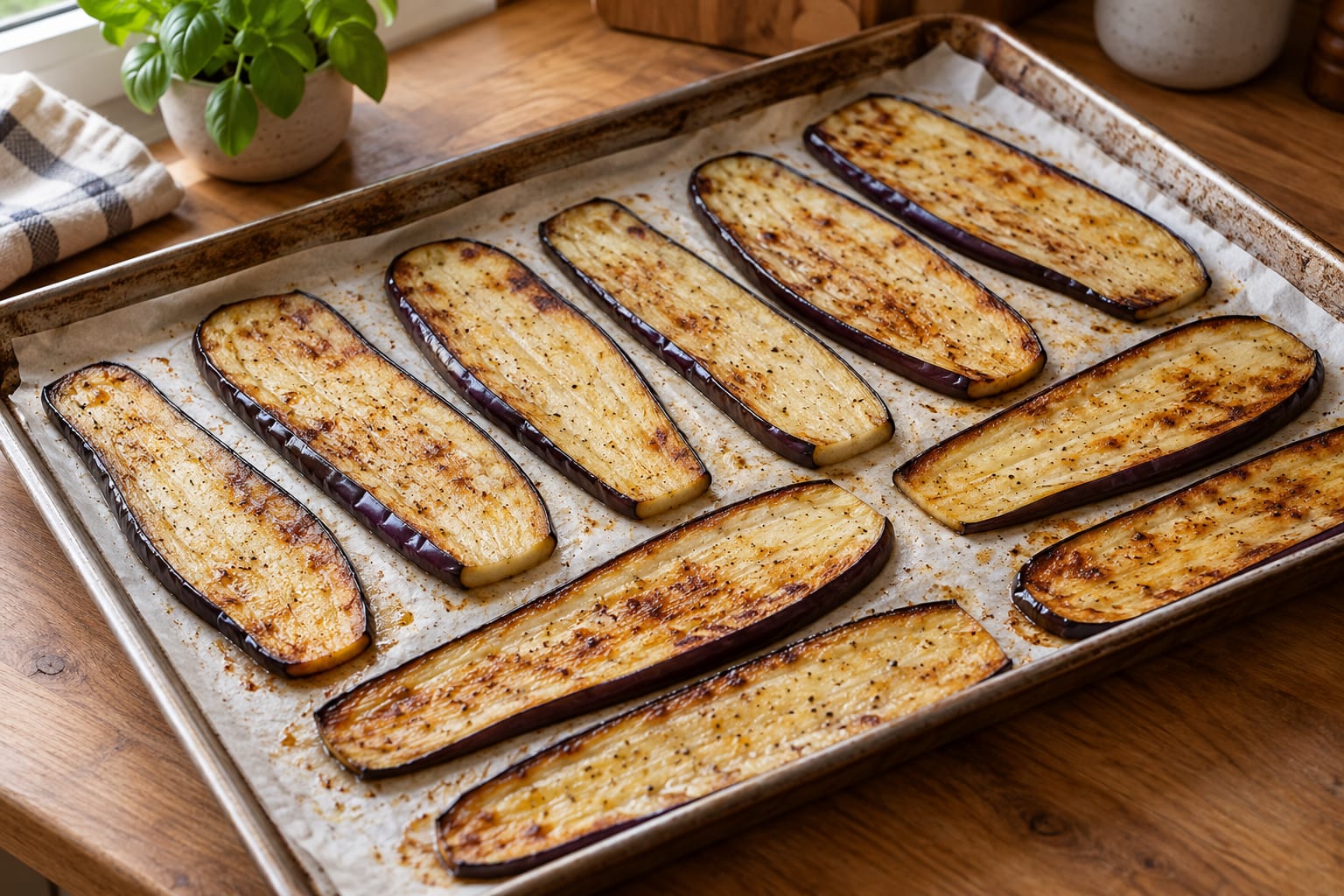 1. Roast the eggplant slices
 2. Simmer a thick tomato sauce
 3. Build two eggplant and cheese layers
 4. Bake, rest and serve
Watch How To Make It

chefzelish.com
Roasted Eggplant Parmesan with Basil
Tender roasted eggplant layered with a thick tomato sauce, mozzarella and Parmesan, then baked until golden. A comforting main dish with no breading or frying.
Ingredients
0 / 13 readyIngredient amounts for 6 portions
Roasted eggplant
Tomato sauce
Cheese and basil layers
Let’s make it.
Roast the eggplant slices
Heat the oven to 425°F (220°C) conventional or 400°F (200°C) fan. Line two large rimmed metal sheet pans with parchment rated for this temperature. Cut the trimmed eggplant lengthwise into even 1/3-inch (8 mm) slices. Arrange in a single layer without overlapping and brush both sides with the measured 35 g olive oil. Do not add salt or oil here. Roast for 30–35 minutes, turning the slices and swapping the pans halfway through, until the flesh is soft and lightly golden. If the slices do not fit without crowding, roast in batches; this extends the total time. Keep the cooked slices intact with a wide spatula.
Simmer a thick tomato sauce
While the eggplant roasts, heat 15 g olive oil in a saucepan over medium-low heat. Cook the onion for 6–8 minutes, stirring, until softened. Add the garlic and tomato paste and stir for 1 minute. Add the crushed canned tomatoes with all their juice, oregano, 4 g salt and black pepper. Bring to a gentle simmer and cook uncovered for 20–25 minutes, stirring occasionally, until thick enough that a spoon drawn through the sauce leaves a short path on the bottom. Reduce the heat if it splatters or catches; the sauce should not scorch. Do not add water unless a small splash is needed to prevent sticking.
Build two eggplant and cheese layers
Reduce the oven to 375°F (190°C) conventional or 350°F (175°C) fan. Spread a thin layer of sauce over the base of a 9 x 13-inch (23 x 33 cm) baking dish, using about one-sixth of the total sauce. Cover with half the roasted eggplant, overlapping slightly only where needed to cover the base. Add about two-fifths of the remaining sauce, 100 g mozzarella, 25 g Parmesan-style cheese and the 10 g torn basil. Add the remaining eggplant, all the remaining sauce, 140 g mozzarella and 35 g Parmesan-style cheese. Spread everything evenly; keep the final 5 g basil for serving. The casserole contains two eggplant layers and no pasta.
Bake, rest and serve
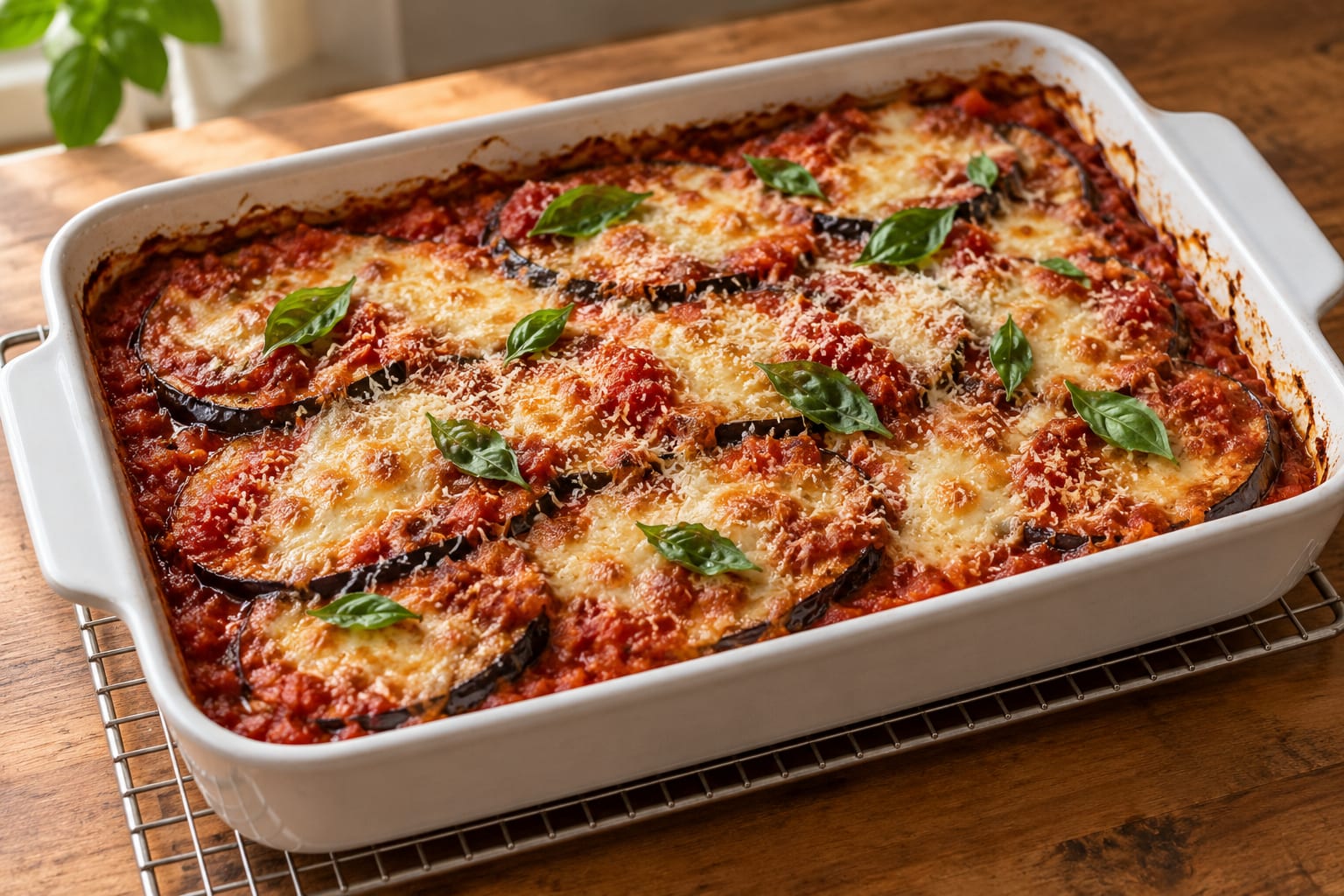
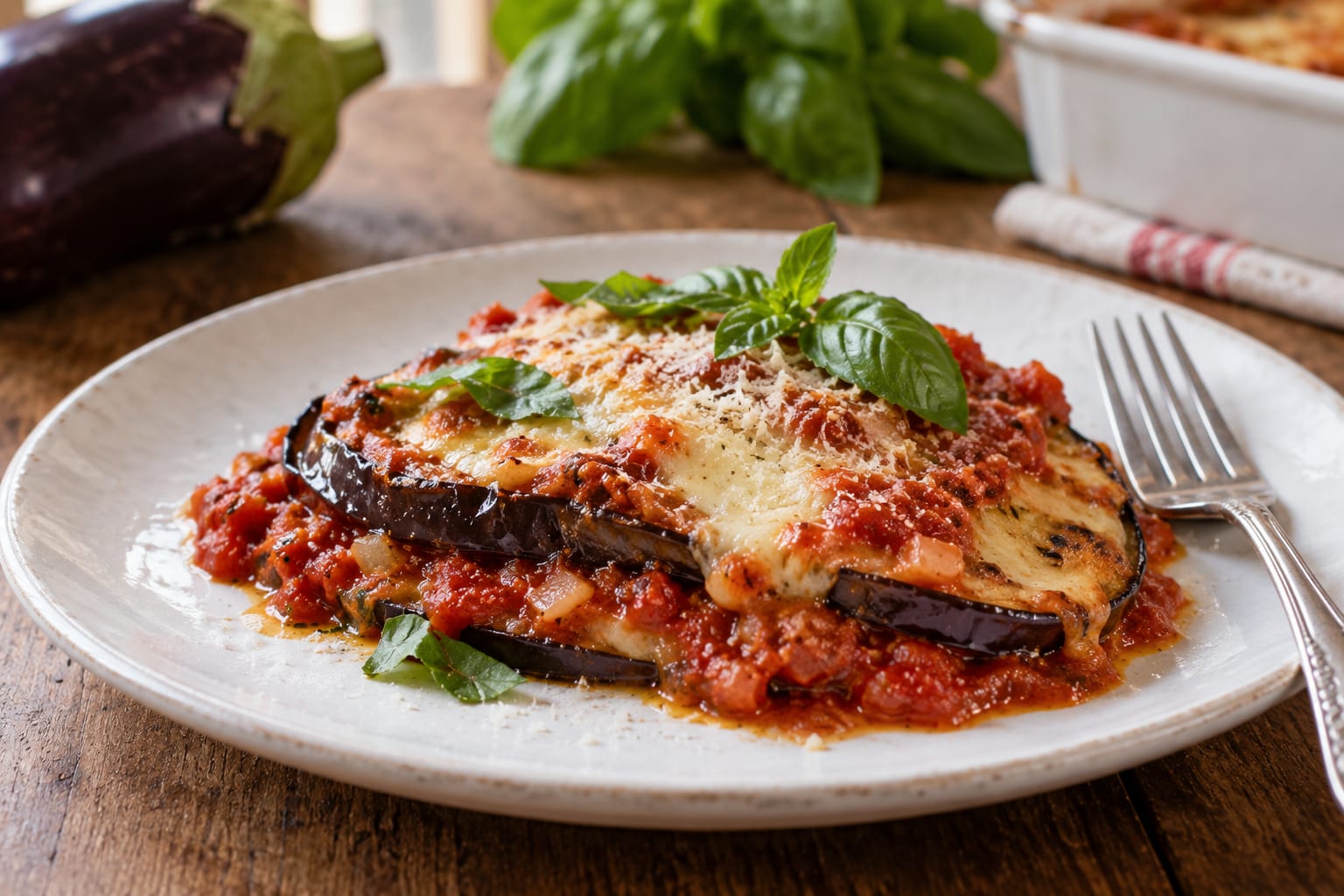
Bake uncovered on the middle rack for 30–35 minutes, until the sauce bubbles around the edges, the center is thoroughly hot and the cheese has golden patches. If the cheese browns before the center is hot, cover loosely with foil and continue baking. Place the dish on a wire rack and rest for 10 minutes. Scatter over the reserved 5 g basil, then divide into six portions with a wide spatula. Expect tender, somewhat loose layers rather than rigid slices. Take care with the hot dish and bubbling sauce.
Nutrition per serving
1 portion: one-sixth of the whole casserole. Estimates may vary with ingredients and brands.
- Calories
- 323 kcal
- Protein
- 16 g
- Carbohydrates
- 24 g
- Fat
- 19.8 g
- Saturated fat
- 7.3 g
- Fiber
- 9.4 g
- Sugar
- 12.7 g
- Sodium
- 726 mg
Checked 10/4/2026. Values are per the serving described above, regardless of recipe yield.
Notes from the kitchen.
Helpful tips
Allow about 1 hour 40 minutes: 25 minutes preparation, about 65 minutes roasting and final baking, and 10 minutes resting. Make the sauce during the roasting stage. Crowded trays, extra roasting batches and an oven that heats slowly add time.
Make it your own
The formula uses no-salt-added canned tomatoes and paste, low-moisture part-skim mozzarella and Parmesan-style hard cheese. Product swaps change moisture and nutrition. For a vegetarian meal, select vegetarian-rennet versions of both cheeses.
Storage & freezing
Refrigerate in shallow containers within 2 hours and use within 3–4 days at 40°F (4°C) or below. Reheat to 165°F (74°C). Freeze for up to 2 months for best quality.
At the table
One serving is one-sixth of the casserole, including all measured oil, cheese, basil and sauce. Bread, salads and extra cheese are not included in the nutrition estimate.
A little something delicious.
Keep this recipe close for the next time the craving strikes.
Something else you’ll love.
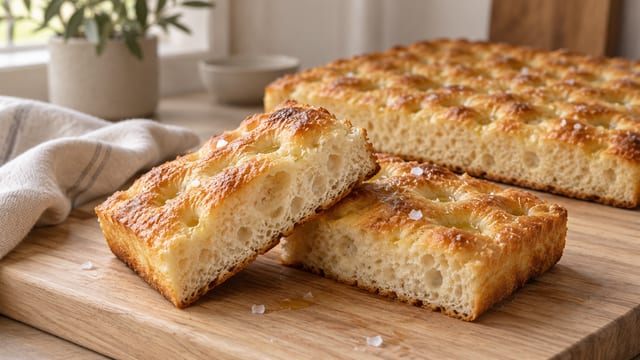
Olive Oil Focaccia with Sea Salt
Get the recipe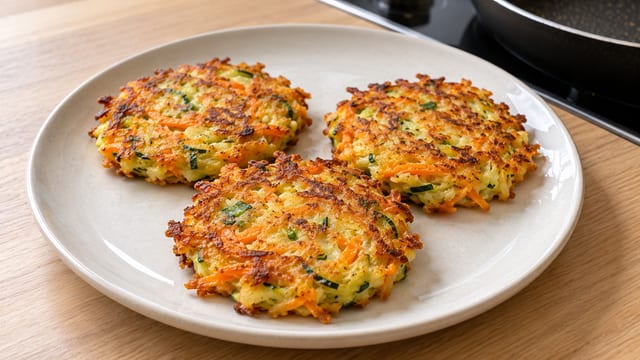
Golden Zucchini and Carrot Fritters
Get the recipe
0 Comments
No ratings yet
No comments yet. Have a question or tried this recipe? Leave a comment above.