
Olive Oil Focaccia with Sea Salt
A golden pan-baked focaccia with a soft, airy center, olive-oil edges and a light sea-salt finish. Two gentle folds build the dough without a mixer.
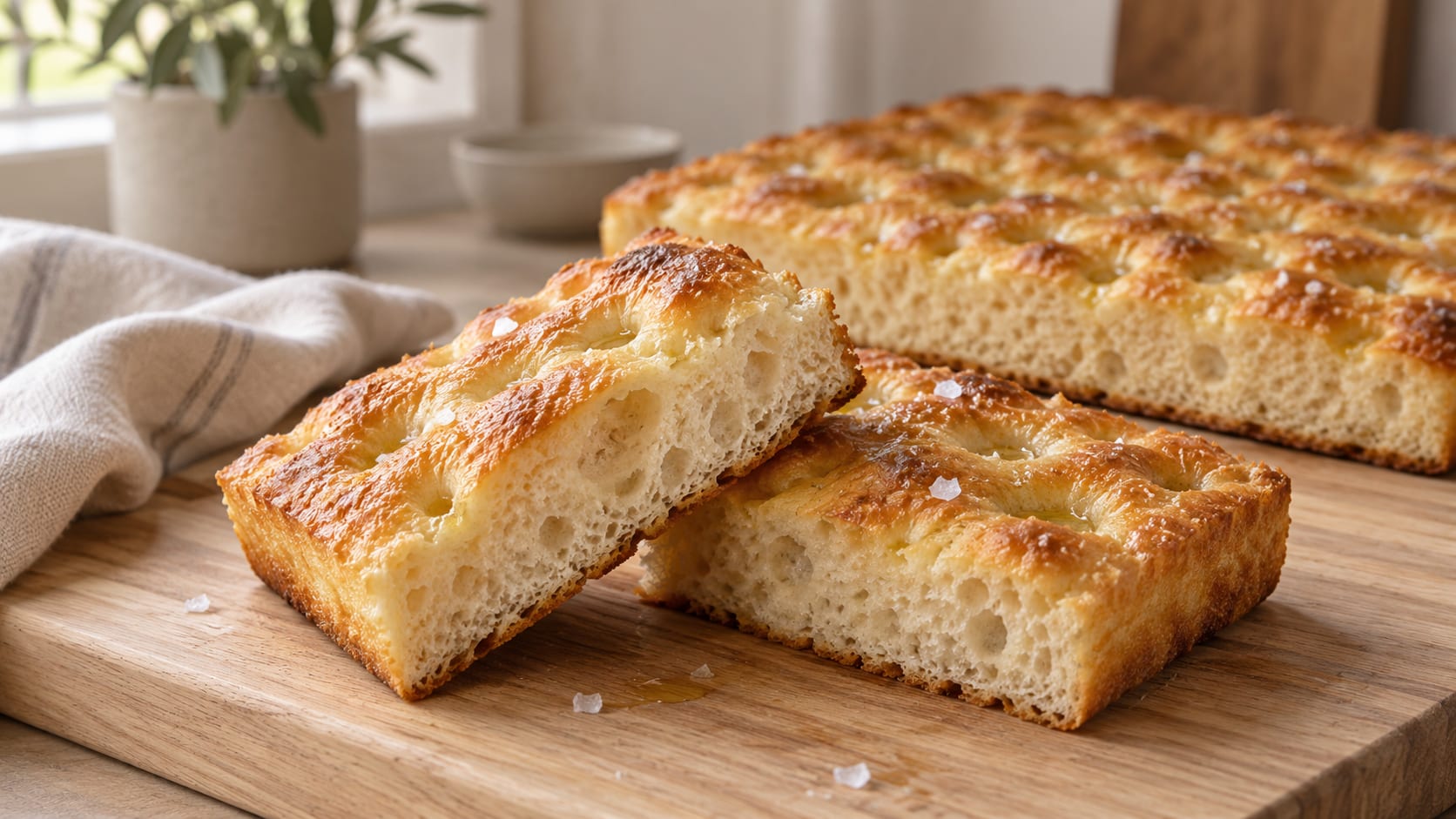
Focaccia is a bread to put in the middle of the table and share. This version keeps the topping simple: olive oil settles into the dimples and a little flaky sea salt contrasts with the soft crumb. The edges become golden in the metal pan, while the middle stays tender enough for sandwiches or for dipping into soup.
The dough is wet and sticky, so it is mixed in a bowl and strengthened with two sets of folds rather than kneaded on a counter. Give it time to rise in the bowl and again in the pan. At a comfortable room temperature, allow roughly three hours and forty minutes from mixing to slicing; a cooler kitchen may need longer. This is a same-day yeast bread, not sourdough.
Why you’ll love this recipe
Bread flour supports the moist dough. Two gentle stretch-and-fold sets help it hold gas without prolonged kneading. A second rise in the pan lets the dough spread and become puffy before dimpling. Measured olive oil under and over the dough encourages a golden surface and crisp edges; a short cooling period lets the crumb settle before cutting.
Before you start · Equipment
Large mixing bowl; kitchen scale; spatula or wooden spoon; 9 x 13-inch (23 x 33 cm) metal baking pan, at least 2 inches (5 cm) deep; baking parchment rated for the stated oven temperature; loose cover; oven mitts; wire rack; serrated knife.
Everything you’ll need.
Get your ingredients ready, then follow the quantities in the recipe below.
See ingredient amounts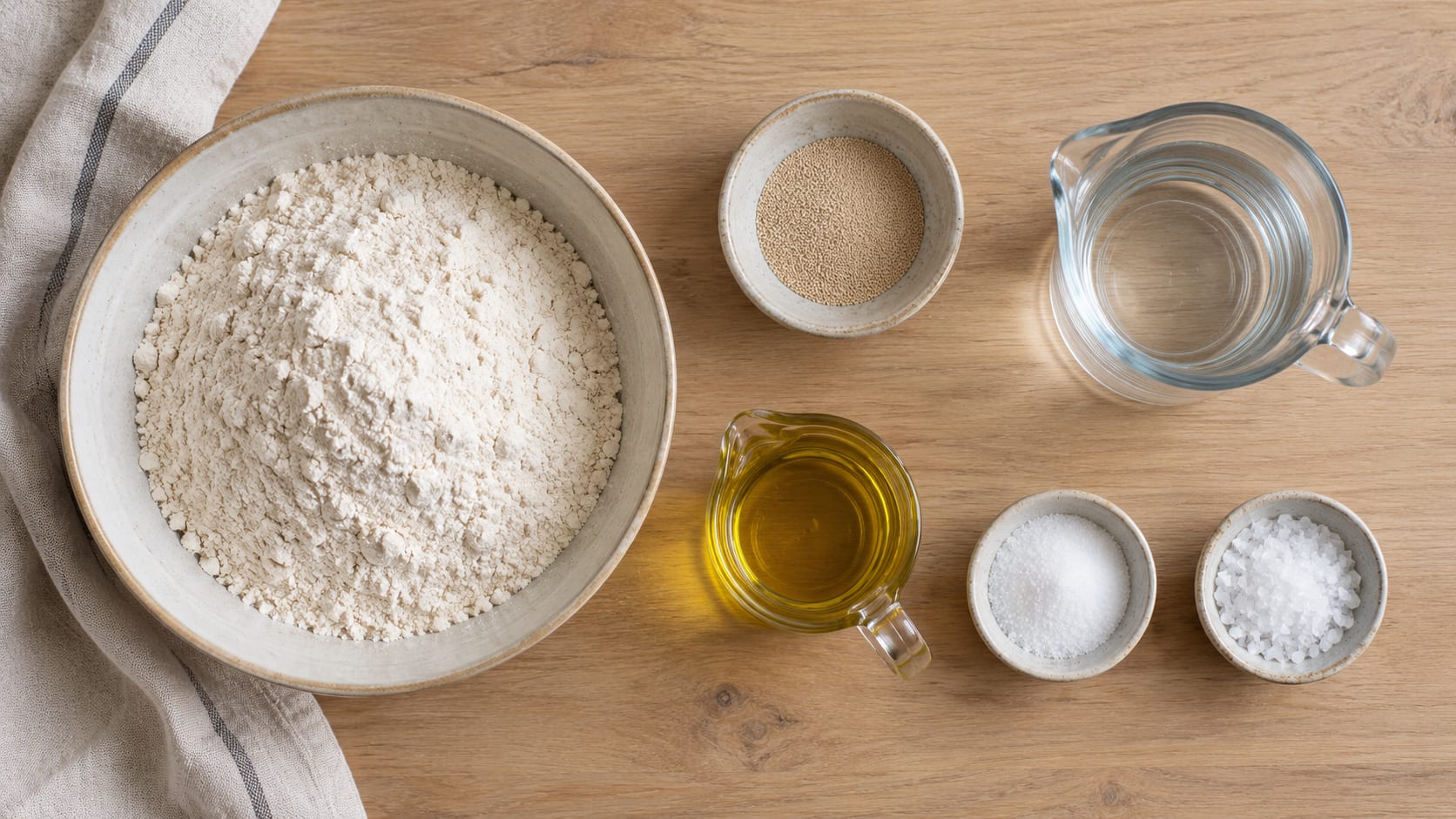
This guide describes the original 12 pieces. Use the recipe card for amounts adjusted to your chosen yield.
The dough should stay sticky
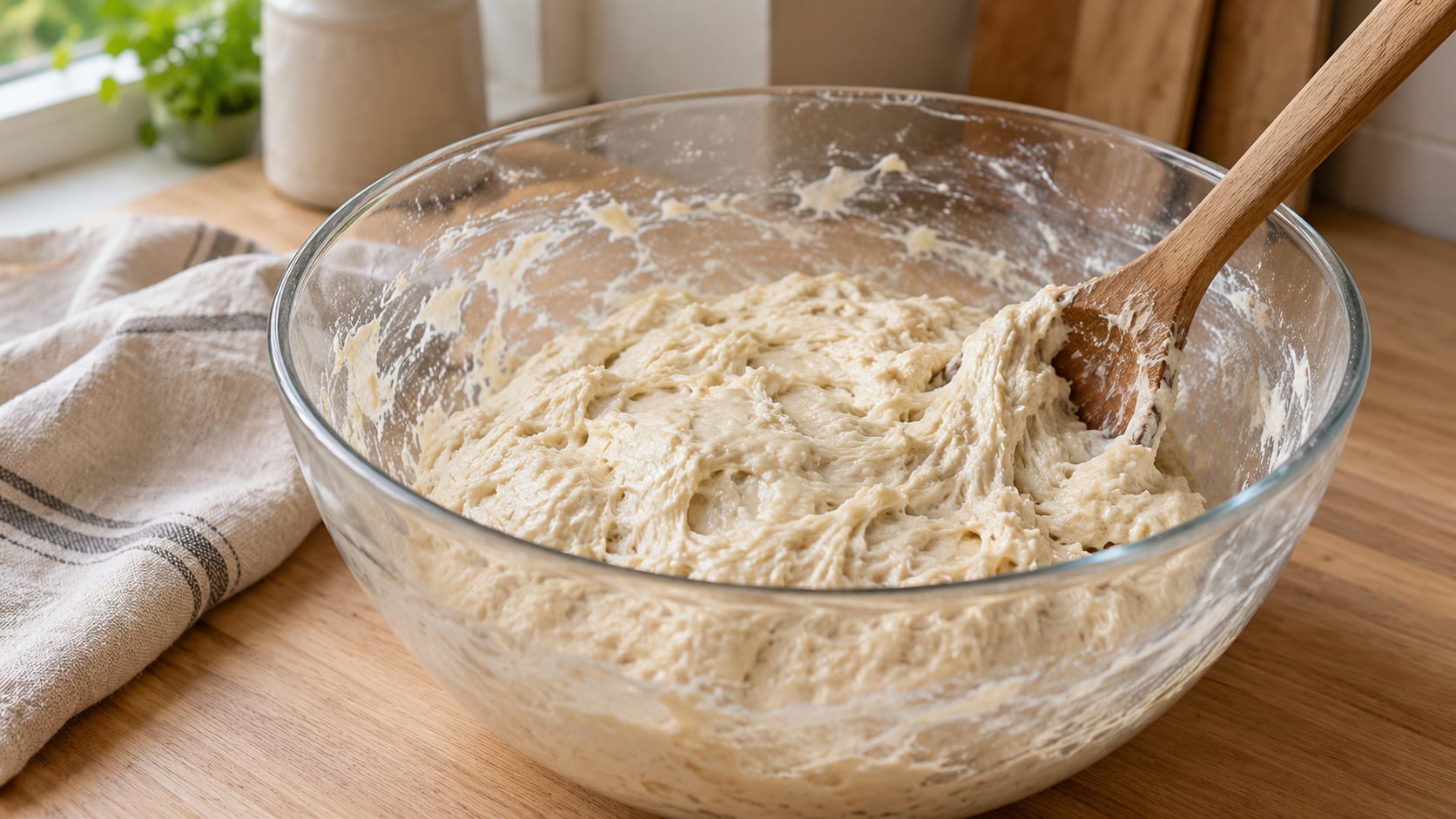
A wet dough can feel unusual if you are used to kneading a firm loaf. Use a spatula for mixing and damp fingers for the folds. Adding enough flour to make it dry and easy to handle changes this focaccia into a different dough. The folds make it more cohesive without turning it stiff.
Read the rise, not just the timer
Look for increased volume and visible bubbles after the first rise. In the pan, the dough should relax outward and feel puffy before you make dimples. If it springs back while you spread it, give it a short covered rest. The stated times assume a room near 72–77°F (22–25°C).
A metal pan and a well-browned base
Use the stated 9 x 13-inch metal pan for this batch. A smaller pan makes a thicker bread with a different bake time. Glass and ceramic heat differently and are not the recommended pans here.
- Line the pan with parchment rated for 425°F (220°C), following the manufacturer limits.
- Keep the cover clear of the rising dough so it does not stick and deflate it.
- Check the base as well as the top, and move the bread to a rack to release steam.
Serve with soup or make sandwiches
Serve warm pieces alongside Creamy Potato Soup with Cheddar and Scallions, or split the cooled bread horizontally for sandwiches. The focaccia has enough oil and salt to enjoy on its own. Soup, sandwich fillings, butter and dipping oil are additional to the listed nutrition.
Keep the crust at its best
Focaccia is best on the day it is baked. Once completely cool, wrap and keep at room temperature for up to 2 days in a cool, dry kitchen. For longer storage, freeze individual pieces in an airtight bag for up to 2 months for best quality. Thaw and warm briefly in a moderate oven. Do not package it while warm, because trapped steam softens the crust.
Common focaccia questions
Do I need a stand mixer? No; a bowl, spoon and two fold sets are enough. Is this sourdough? No, it uses instant yeast. Can I add rosemary or olives? They change the topping and nutrition, so they are extras rather than part of this plain sea-salt formula. Can I bake immediately after mixing? Allow both rises. Can I use a smaller pan? Use the specified pan to match the thickness and timing.
About the ingredients
- Bread flour
Bread flour gives structure to this moist dough and makes a pleasantly chewy crumb. Brands absorb water differently. Keep the stated 500 g flour and 400 g water as the starting formula rather than adding handfuls of flour to manage stickiness.
- Instant yeast
Instant yeast can be mixed directly with the flour. Check the date and storage instructions. Active dry yeast has a different activation method, so follow its package directions if substituting; that variation is not the stated method.
- Olive oil
Use 60 g in total: 20 g in the dough, 20 g beneath it and 20 g over it. Take the oil for your fingertips from the measured topping allowance. The nutrition estimate includes all of this oil, even though a little may remain on the paper.
- Two salt textures
Fine salt mixes evenly into the dough; flaky salt gives occasional crisp touches on top. Weigh both. A teaspoon of fine salt and a teaspoon of flaky salt do not weigh the same, and extra topping salt changes the sodium estimate.
- Water and room temperature
Water at about 95°F (35°C) feels gently warm and supports a comfortable rise. Do not use hot water. A cool room slows fermentation, so wait for visible expansion rather than following the clock alone.
How to make Olive Oil Focaccia with Sea Salt
Mix a sticky dough, give it two four-sided folds and let it rise until airy. Spread it in an oiled, parchment-lined metal pan for a second proof. Dimple with the remaining measured olive oil, add flaky salt, bake until golden and cool on a rack before cutting into twelve pieces.
 1. Mix the dough and give it two gentle folds
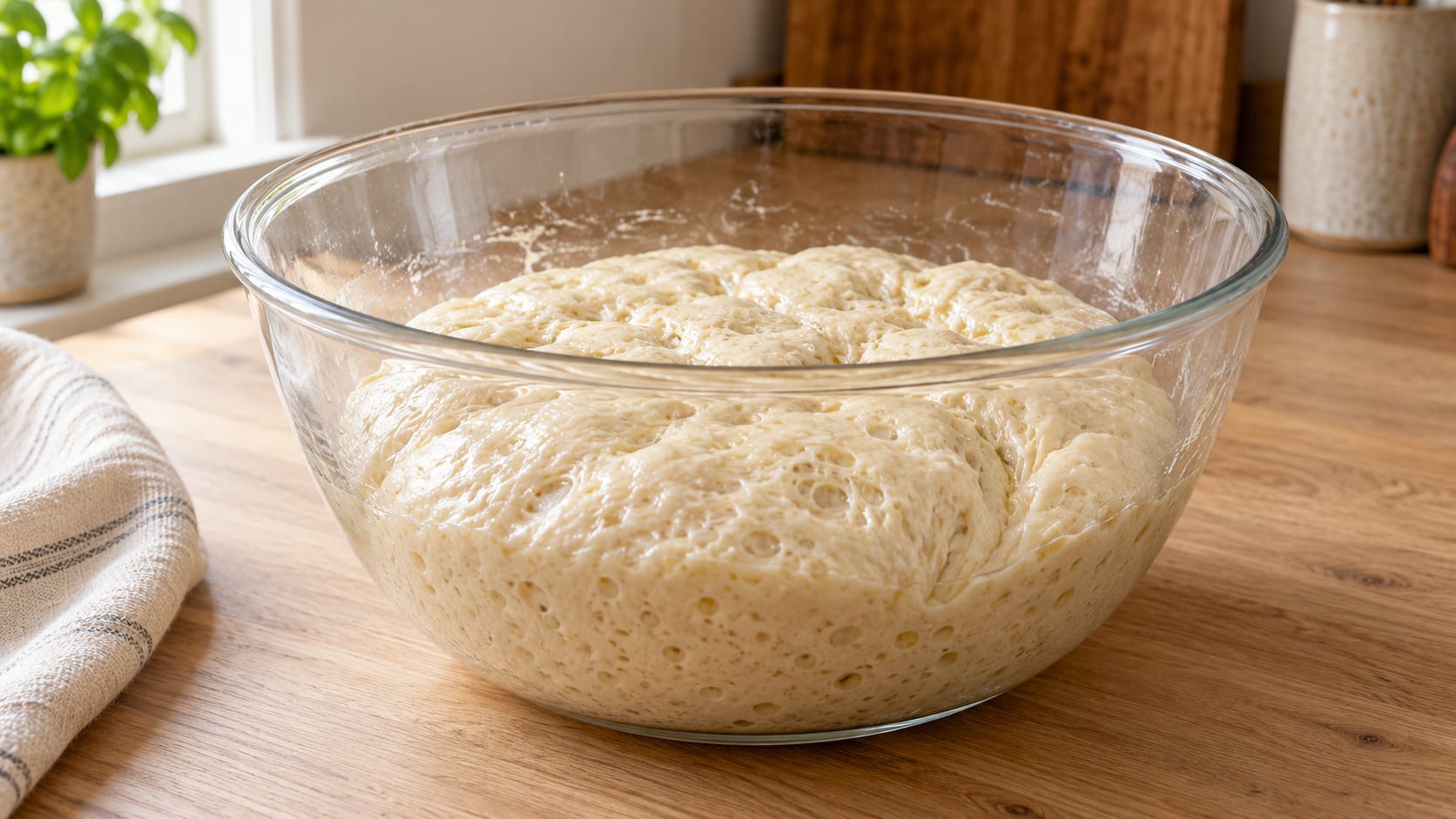 2. Let the dough rise until airy
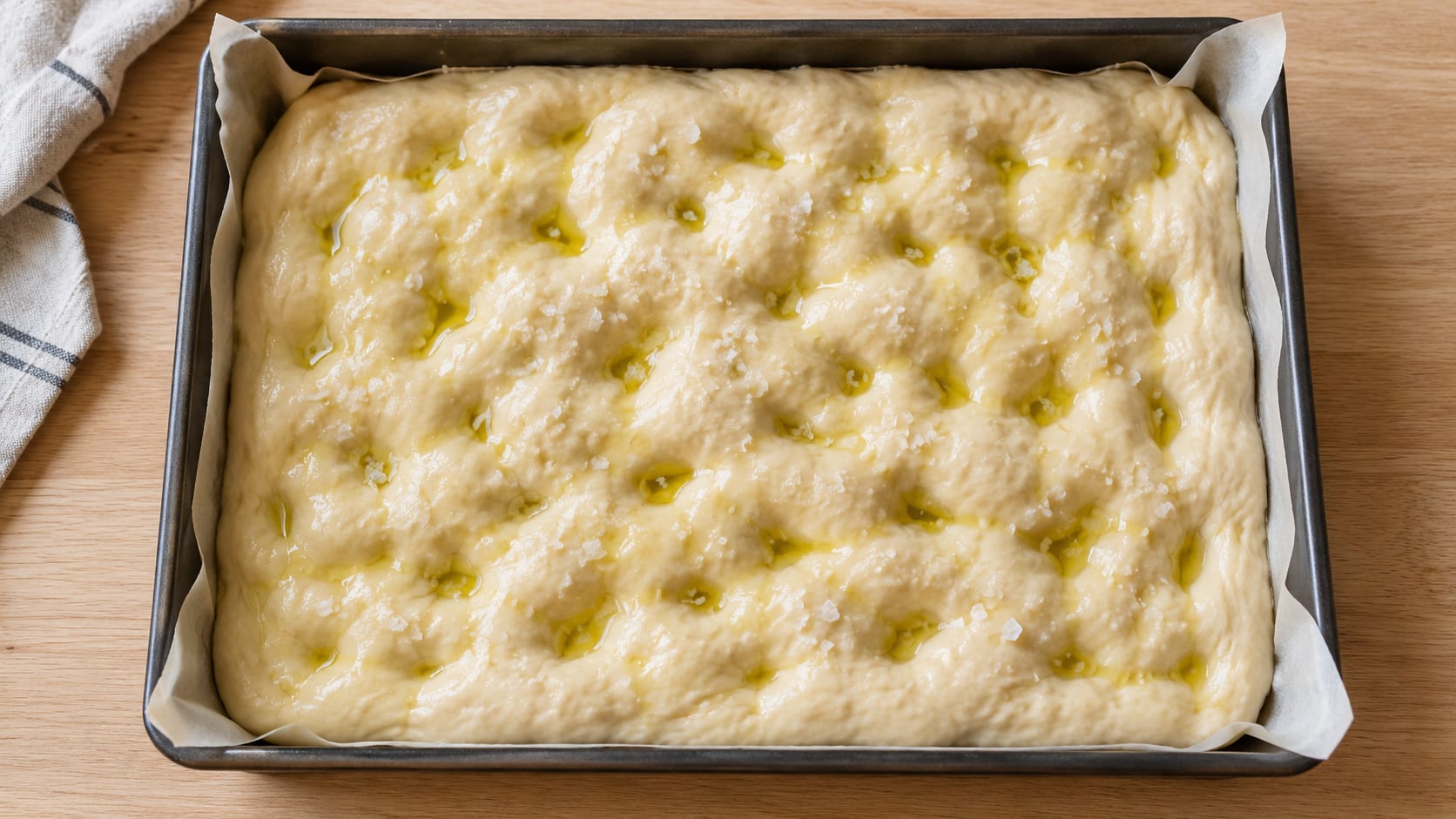 3. Proof in the pan, then dimple and season
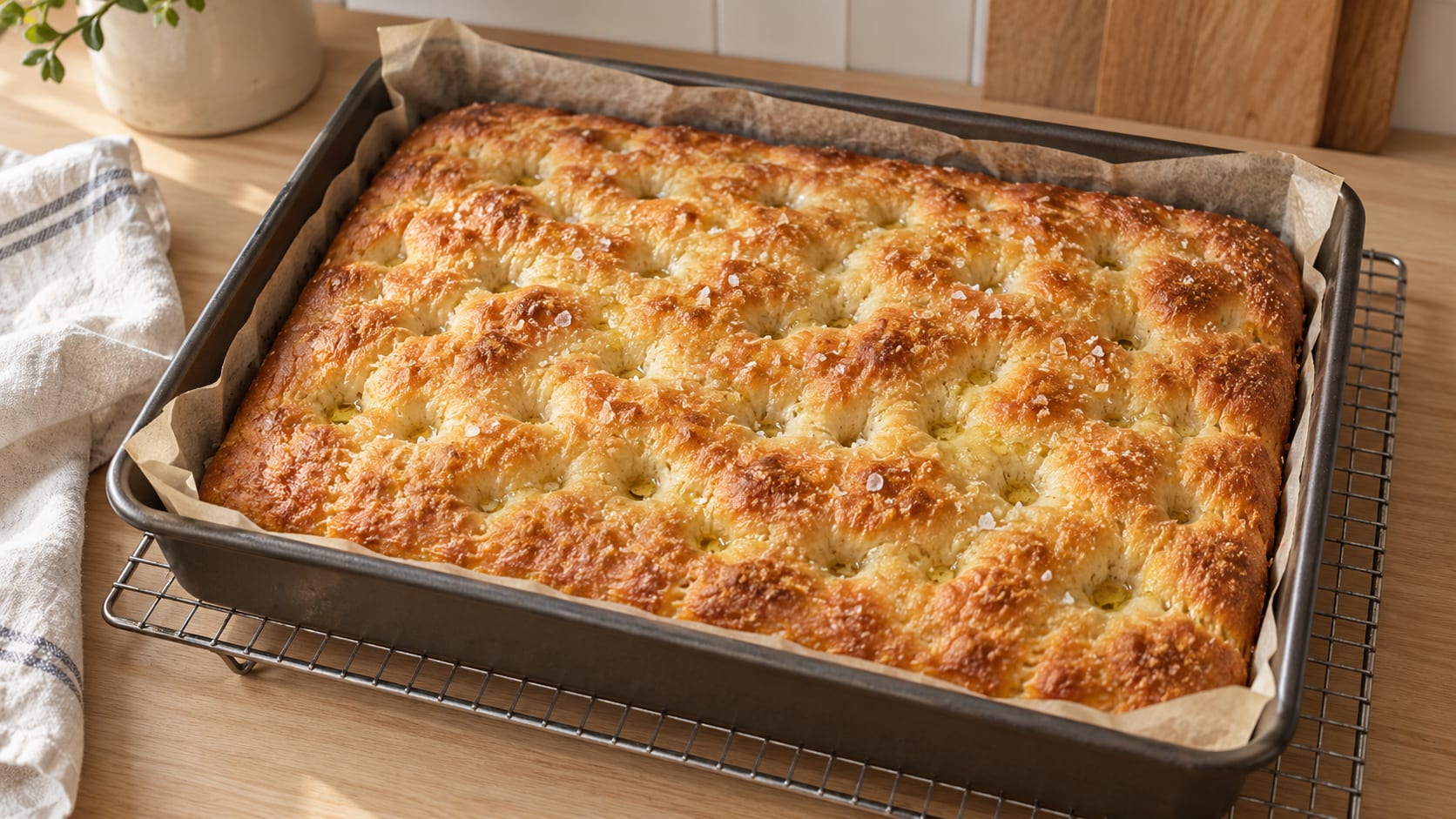 4. Bake until golden and cool before cutting
Watch How To Make It

chefzelish.com
Olive Oil Focaccia with Sea Salt
A golden pan-baked focaccia with a soft, airy center, olive-oil edges and a light sea-salt finish. Two gentle folds build the dough without a mixer.
Ingredients
0 / 7 readyIngredient amounts for 12 pieces
Dough
Pan and topping
Let’s make it.
Mix the dough and give it two gentle folds
Stir the bread flour, instant yeast and fine salt together in a large bowl. Add the lukewarm water and 20 g olive oil. Mix thoroughly until there are no pockets of dry flour. The dough should be sticky and soft; do not add flour to make it easy to knead. Cover and rest for 15 minutes. Moisten your fingertips with water, lift one side of the dough and fold it over the center. Turn the bowl and repeat from the other three sides. Cover for another 15 minutes, then repeat the four folds once more. These two sets replace counter kneading.
Let the dough rise until airy
Cover the bowl and leave at about 72–77°F (22–25°C) for another 45–60 minutes, until the dough is roughly doubled from its original mixed volume, soft and visibly aerated. Including the two short rests, this first rise takes about 75–90 minutes. Use the change in volume and bubbles as your guide; a cool room takes longer. Keep the bowl away from a hot oven or direct heat.
Proof in the pan, then dimple and season
Line the base and sides of a 9 x 13-inch (23 x 33 cm) metal pan with temperature-rated parchment and spread 20 g olive oil over the base. Scrape in the risen dough and turn it gently to coat the underside. Ease it toward the corners without tearing; if it resists, wait 10 minutes, then gently stretch again. Cover loosely, leaving room above the dough, and let rise for 45–60 minutes until puffy and relaxed across the pan. This includes any short pause while stretching. During the final 20 minutes, heat the oven to 425°F (220°C) conventional or 400°F (200°C) fan. Drizzle the remaining 20 g oil over the dough, use some of that oil on your fingertips and press dimples across the surface almost to the base without tearing holes. Scatter the 2 g flaky salt evenly.
Bake until golden and cool before cutting
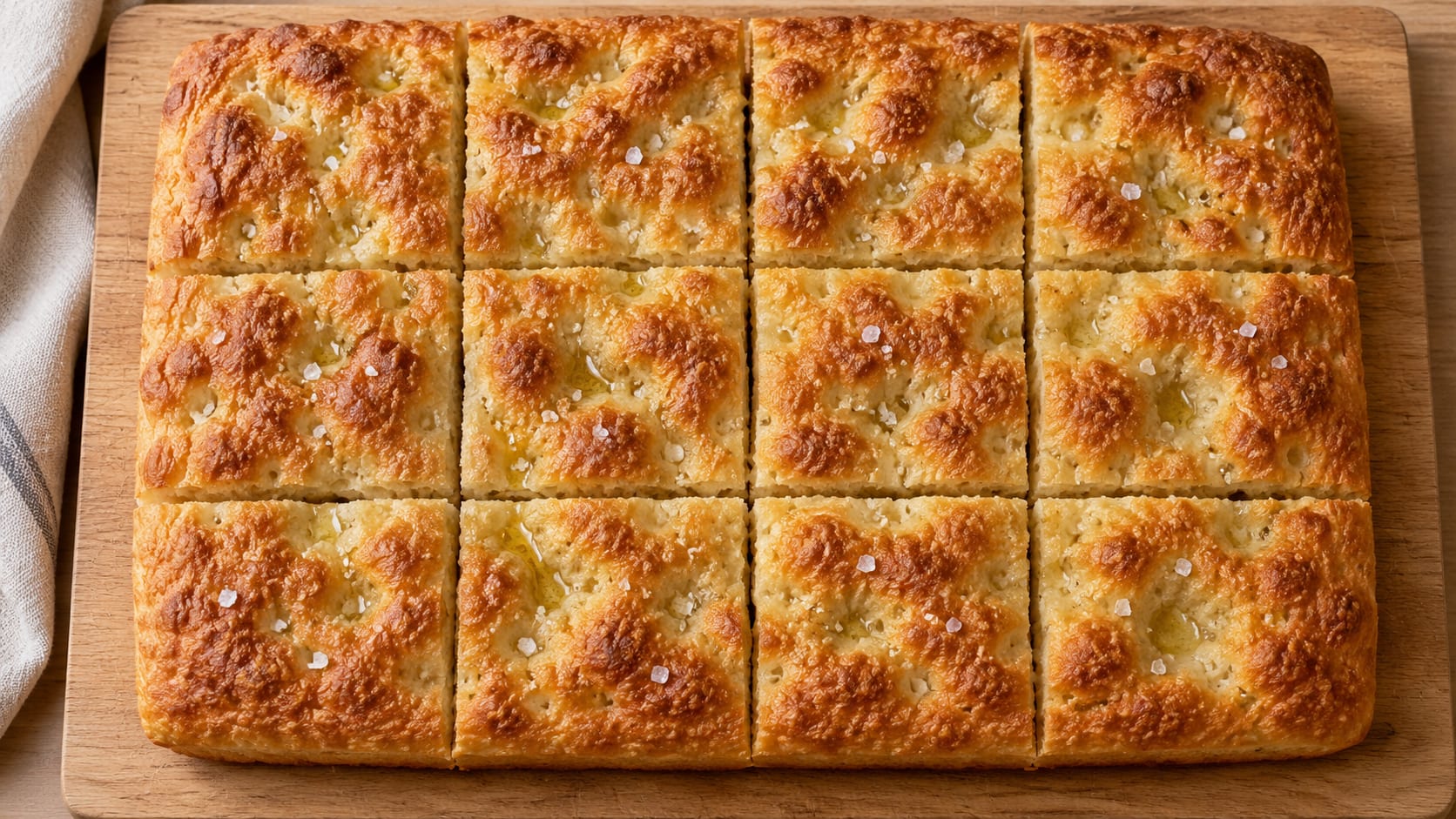
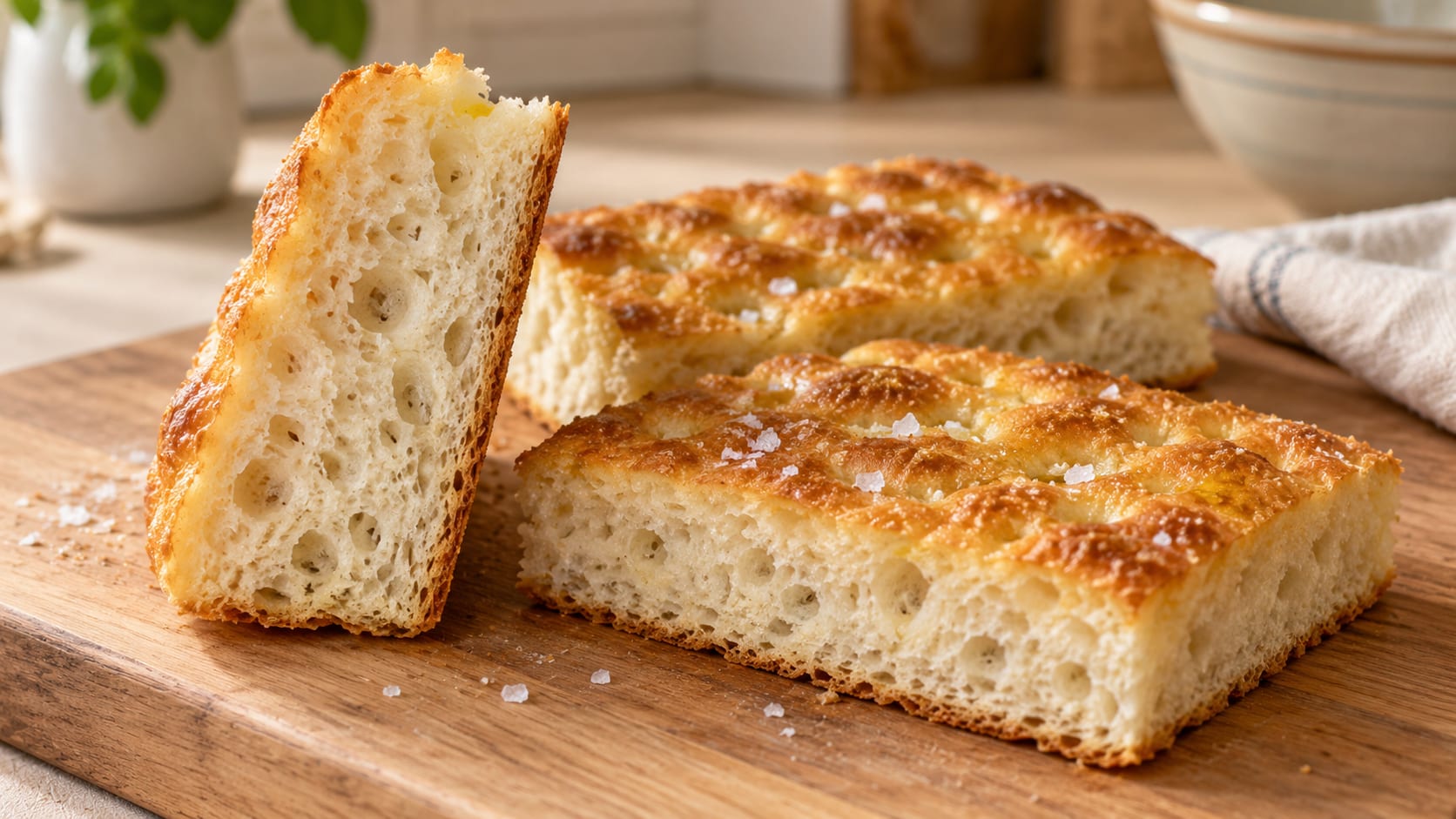
Bake on the middle rack for 25–30 minutes, until the surface is golden and the edges are deeply colored. Rotate once if your oven browns unevenly. Carefully lift a corner with a spatula to check that the base is browned rather than pale and damp; if needed, bake a few minutes longer. Remove the pan from the oven. After 5 minutes, lift the focaccia out using the parchment and place on a wire rack. Let it cool for at least another 15 minutes, then remove the paper and cut into 12 pieces, making four columns and three rows. Take care with hot oil and the metal pan.
Nutrition per serving
1 piece: one-twelfth of the whole focaccia. Estimates may vary with ingredients and brands.
- Calories
- 197 kcal
- Protein
- 5.2 g
- Carbohydrates
- 30.5 g
- Fat
- 5.7 g
- Saturated fat
- 0.8 g
- Fiber
- 1.2 g
- Sugar
- 0.1 g
- Sodium
- 324 mg
Checked 10/4/2026. Values are per the serving described above, regardless of recipe yield.
Notes from the kitchen.
Helpful tips
The estimated total of 3 hours 40 minutes includes 20 minutes active preparation, up to 30 minutes baking, about 90 minutes for the first rise including the fold rests, 60 minutes in the pan and 20 minutes cooling. Proofing can take longer in a cooler room.
Make it your own
This recipe uses bread flour and instant yeast. All-purpose flour may give a different texture and water absorption; active dry yeast needs its own package activation directions. Gluten-free flour is not a direct substitute.
Storage & freezing
Cool completely before wrapping. Keep for up to 2 days in a cool, dry kitchen, or freeze individual pieces for up to 2 months for best quality. Rewarm to refresh the crust.
At the table
Cut the whole pan into 12 pieces, four columns by three rows. Nutrition is for one-twelfth of the full batch, including all 60 g oil and 10 g combined salts; fillings, soup and extra toppings are excluded.
A little something delicious.
Keep this recipe close for the next time the craving strikes.
Something else you’ll love.
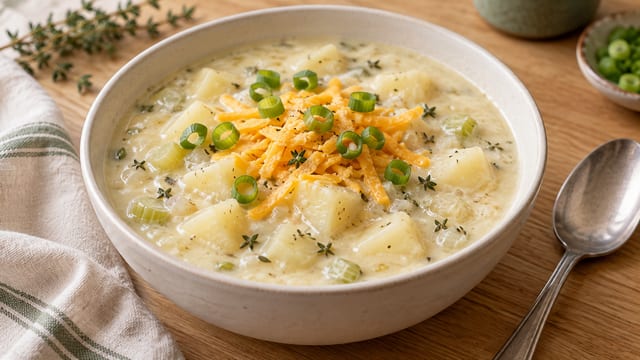
Creamy Potato Soup with Cheddar and Scallions
Get the recipe
Cheddar, Corn and Scallion Muffins
Get the recipe
0 Comments
No ratings yet
No comments yet. Have a question or tried this recipe? Leave a comment above.